 Growney Space
Phobos
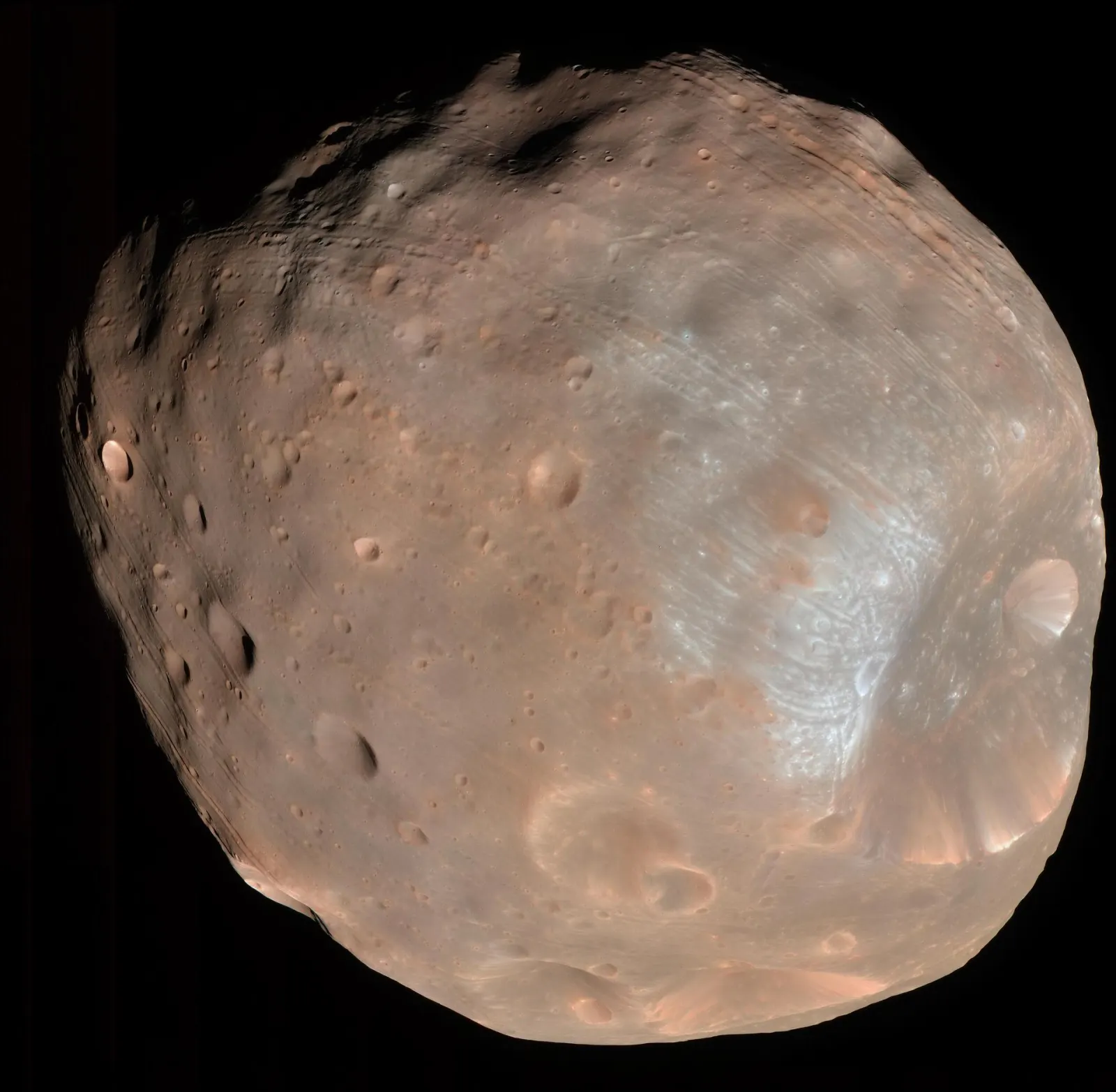
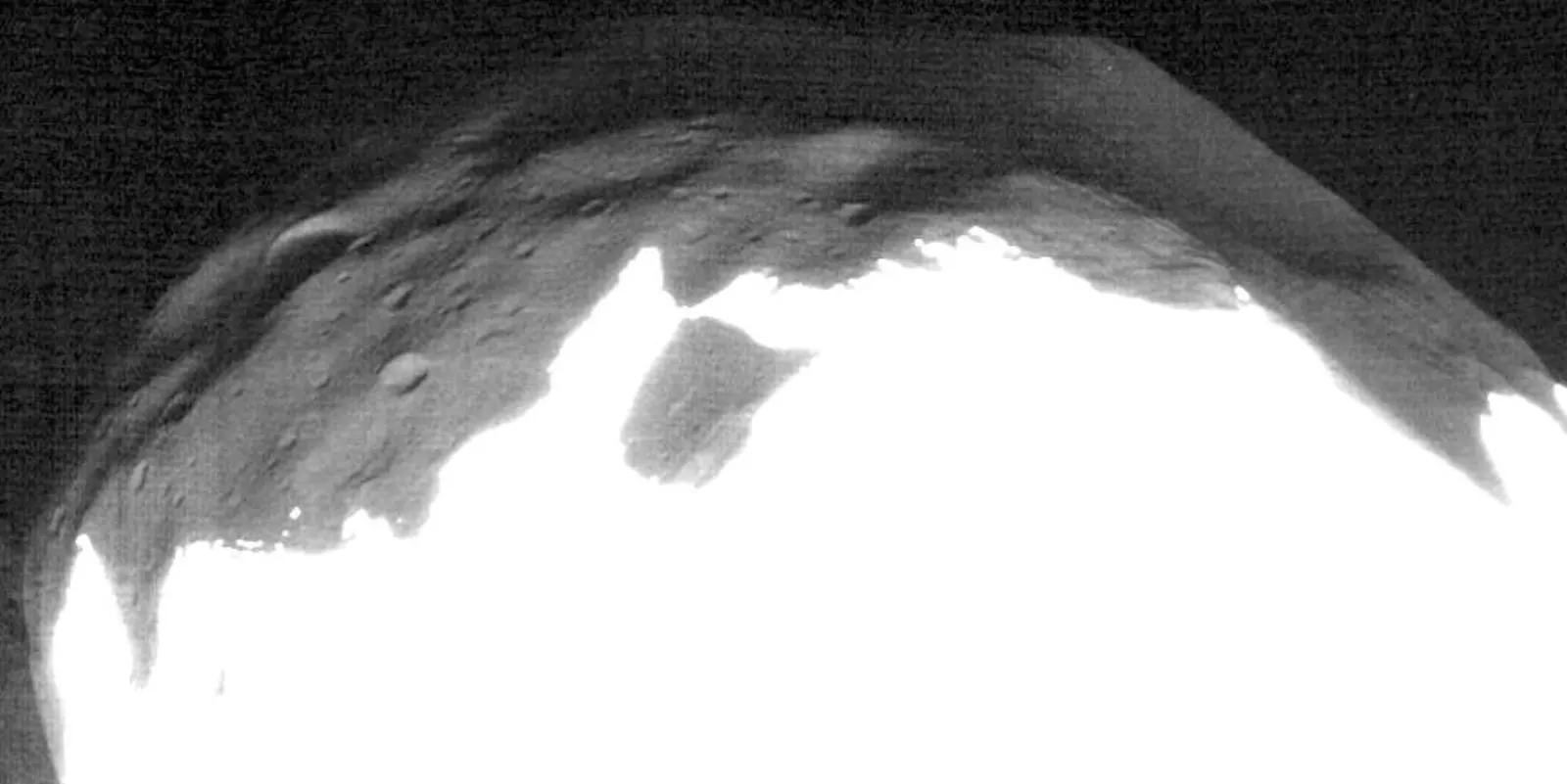
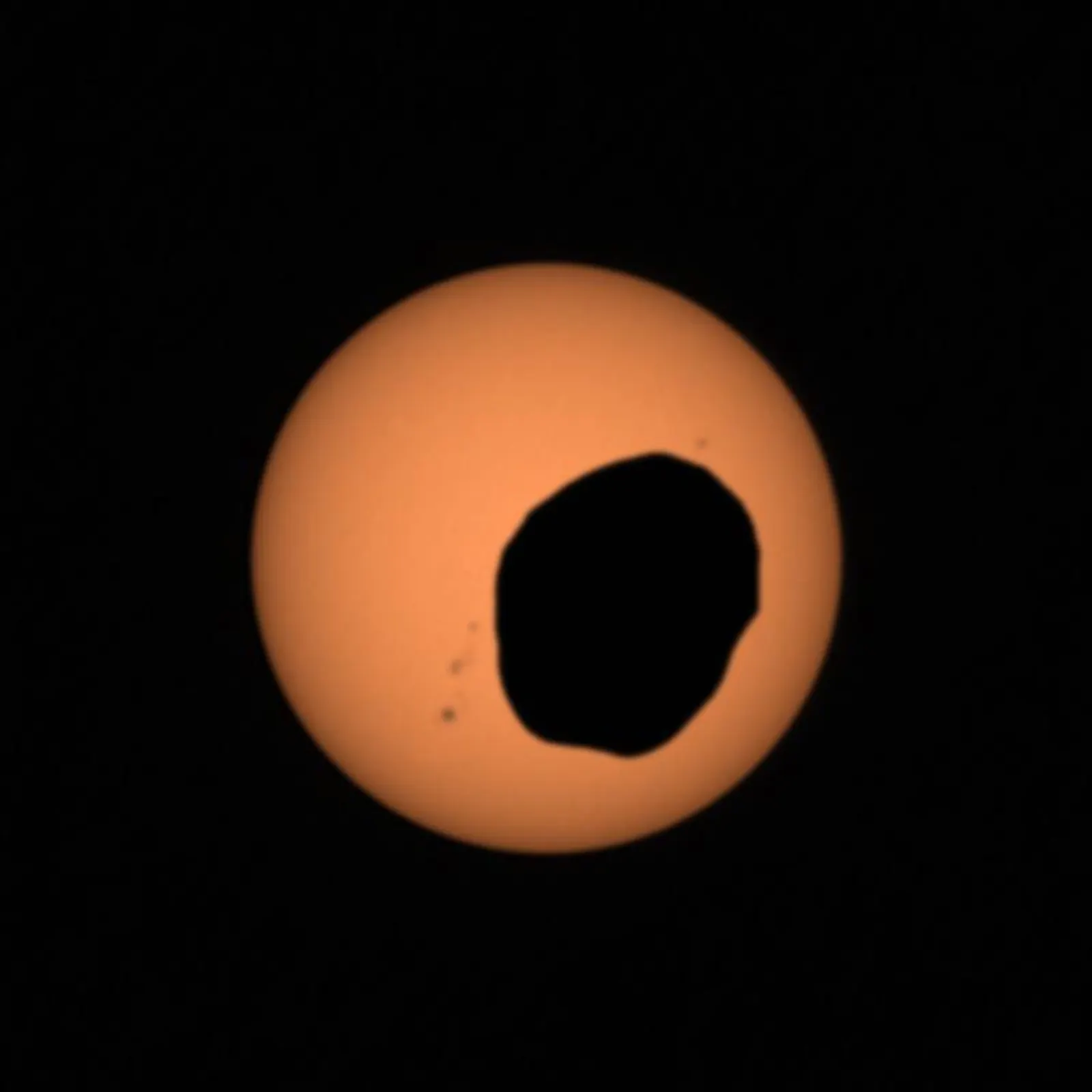
Phobos is the larger of Mars's two moons. A potato that flies so low it will one day fall onto the planet.
What's hidden on Phobos?
Found 0 of 8
Drag sideways to walk all the way round. Tap the seeds

Look for the seeds — I'll tell you about every wonder!
Field journal · Phobos
Nothing yet. The wonders you find will be written here.
Peek at all the wonders
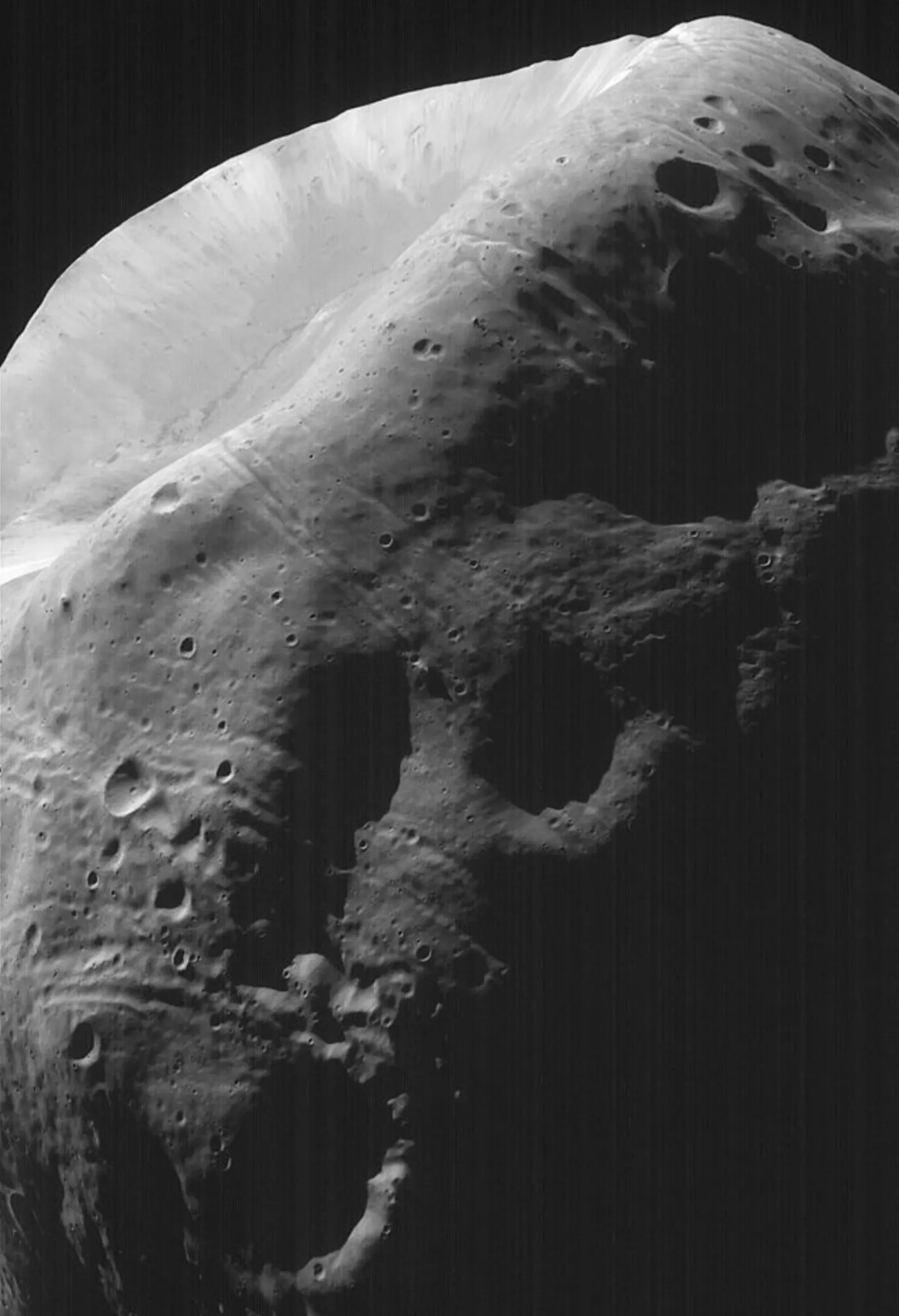
- Phobos's biggest crater, Stickney, takes up almost half the moon. It is full of fine dust that boulders slide down.
- Phobos is scored with grooves and pitted with thousands of impact marks. It was once nearly smashed to pieces.
- Every year Phobos gets a little closer to Mars. One day it will fall onto the planet or crumble into a ring.
- From here Mars fills almost half the sky: Phobos flies very low and circles the planet three times a day.
- I walked all the way round Phobos, and Mars disappeared! Phobos always keeps the same side towards Mars, so from the far side the planet is never in the sky.
- There is almost no gravity here: jump and you soar hundreds of metres, coming back a quarter of an hour later. Get up to speed on a bike and you would fly off for good.
- Mars can't hide behind a fist or even both hands: it is half the sky.
- Phobos is so close that not even one Mars would fit between it and the planet.
Experiments on Phobos
Pebble into orbit
There is almost no gravity on Phobos, so you can throw a pebble so that it circles the moon and becomes its own little satellite. Hold the button to wind up and let go, not too soft and not too hard!
Find every wonder and the game opens! Seeds left: 8 of 8.
Expedition album
1 of 4 · swipe the photo aside, tap to look closer
A potato in your hands
Drag sideways to turn it
For the curious
Phobos is about twenty-seven kilometres long, the size of a small town. Both of Mars's moons were discovered by Asaph Hall in eighteen seventy-seven, and Stickney crater is named after his wife, a mathematician. Phobos moves about two metres closer to Mars every century; in a few tens of millions of years the planet will either pull it in or tear it into a ring.
| Diameter | 22 km |
|---|---|
| Gravity | 0 m/s² |
| Day | 7.7 hours |
| Temperature by day | -4 °C |
| Temperature at night | -112 °C |
Astronaut exam
Find 5 more and we'll start the exam.
