 Growney Space
Titan
Titan is Saturn's largest moon and the only moon with thick air. It has clouds, rain, rivers and lakes.
What's hidden on Titan?
Found 0 of 10
Drag sideways to walk all the way round. Tap the seeds

Look for the seeds — I'll tell you about every wonder!
Field journal · Titan
Nothing yet. The wonders you find will be written here.
Peek at all the wonders
- Titan is the only moon with thick air. It is orange and hazy, so from space you can hardly see the ground.
- Titan has clouds, rain, rivers and lakes. But they are not water: they are liquid methane, the gas we cook with on a stove.
- More than twenty years ago the Huygens probe landed on Titan. It is the farthest place a craft from Earth has ever landed.
- Soon Dragonfly will fly to Titan: a craft with eight rotors that will hop from place to place like a drone.
- On Titan it is almost one hundred and eighty degrees below zero. Water here is as hard as rock, and even the mountains are made of ice.
- From here Saturn is half the size of a fist, and its rings are only a thin line: Titan flies almost in their plane.
- I walked all the way round Titan, and Saturn disappeared! Titan always keeps the same side towards Saturn, so from the far side the planet is never in the sky.
- Titan's air is thick, so here you can hear sounds! The Huygens probe recorded the wind as it came down by parachute.
- The air is thick and gravity is weak. Scientists say that with wings on your arms you could take off here just by flapping them.
- Deep under Titan's icy crust hides an ocean of salty water.
Experiments on Titan
Dragonfly flies
The Dragonfly craft will fly over Titan's dunes like a drone. Hold to climb, let go to descend, fly between the rocks and collect samples!
Find every wonder and the game opens! Seeds left: 10 of 10.
Expedition album
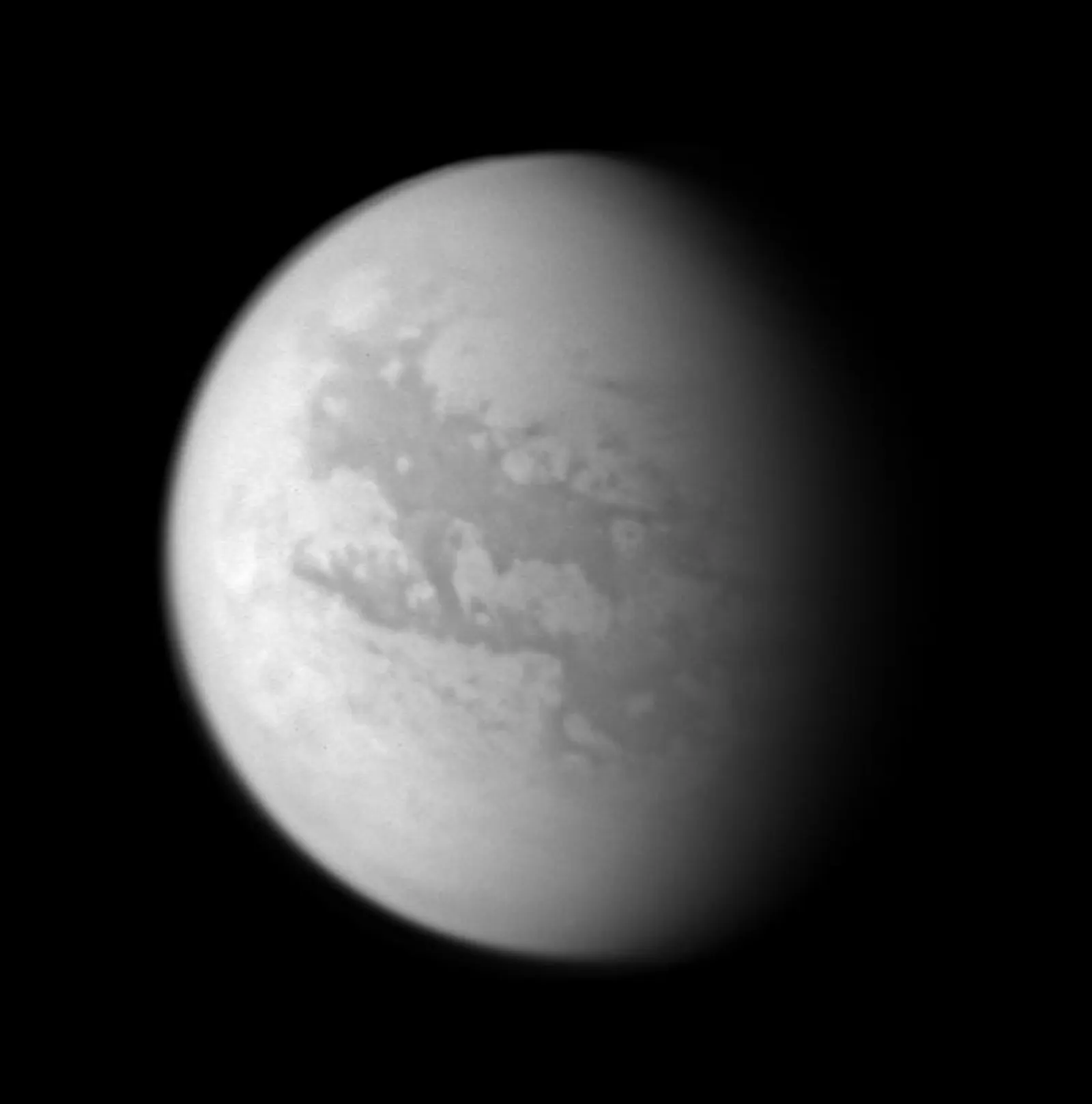
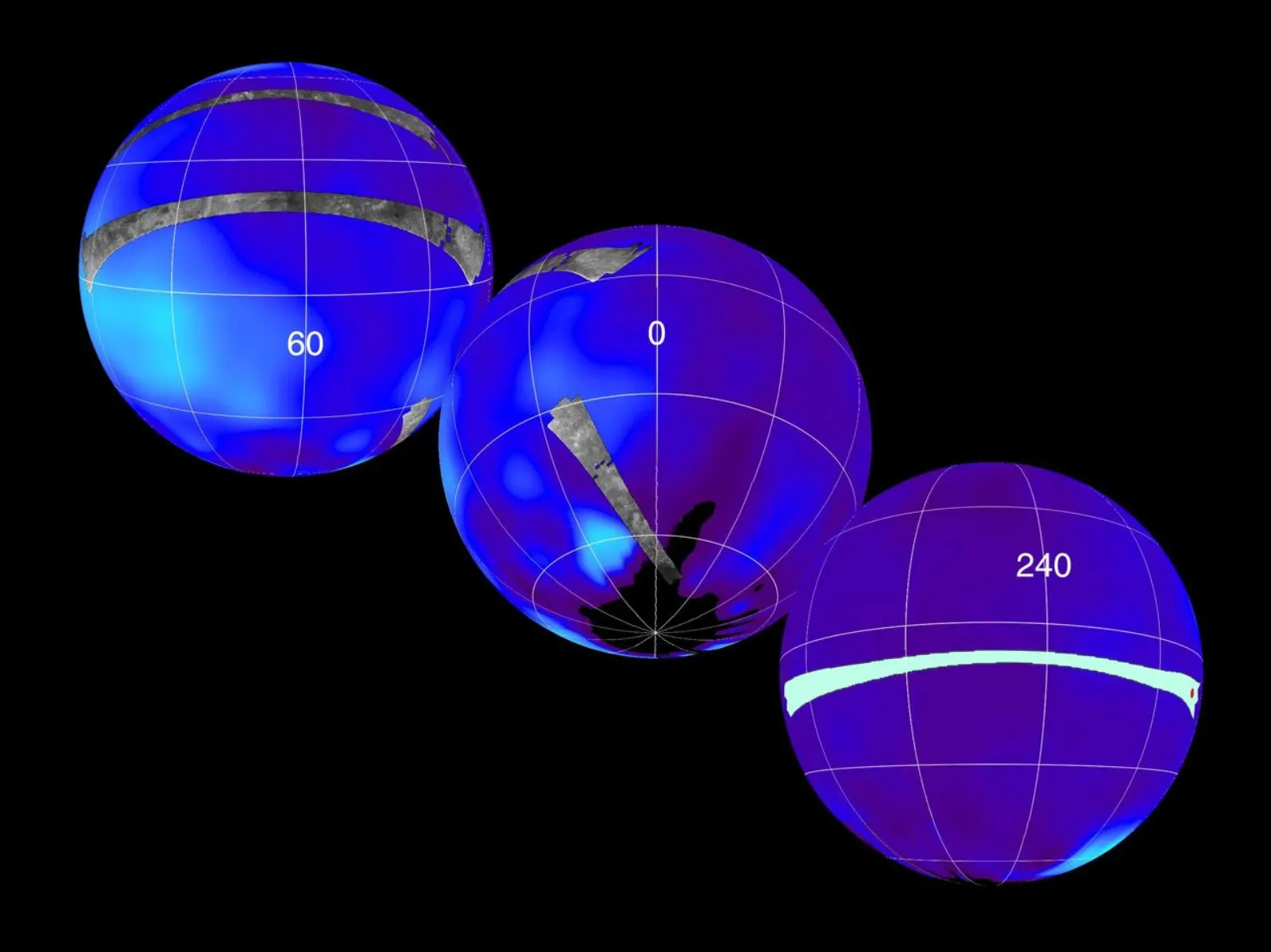
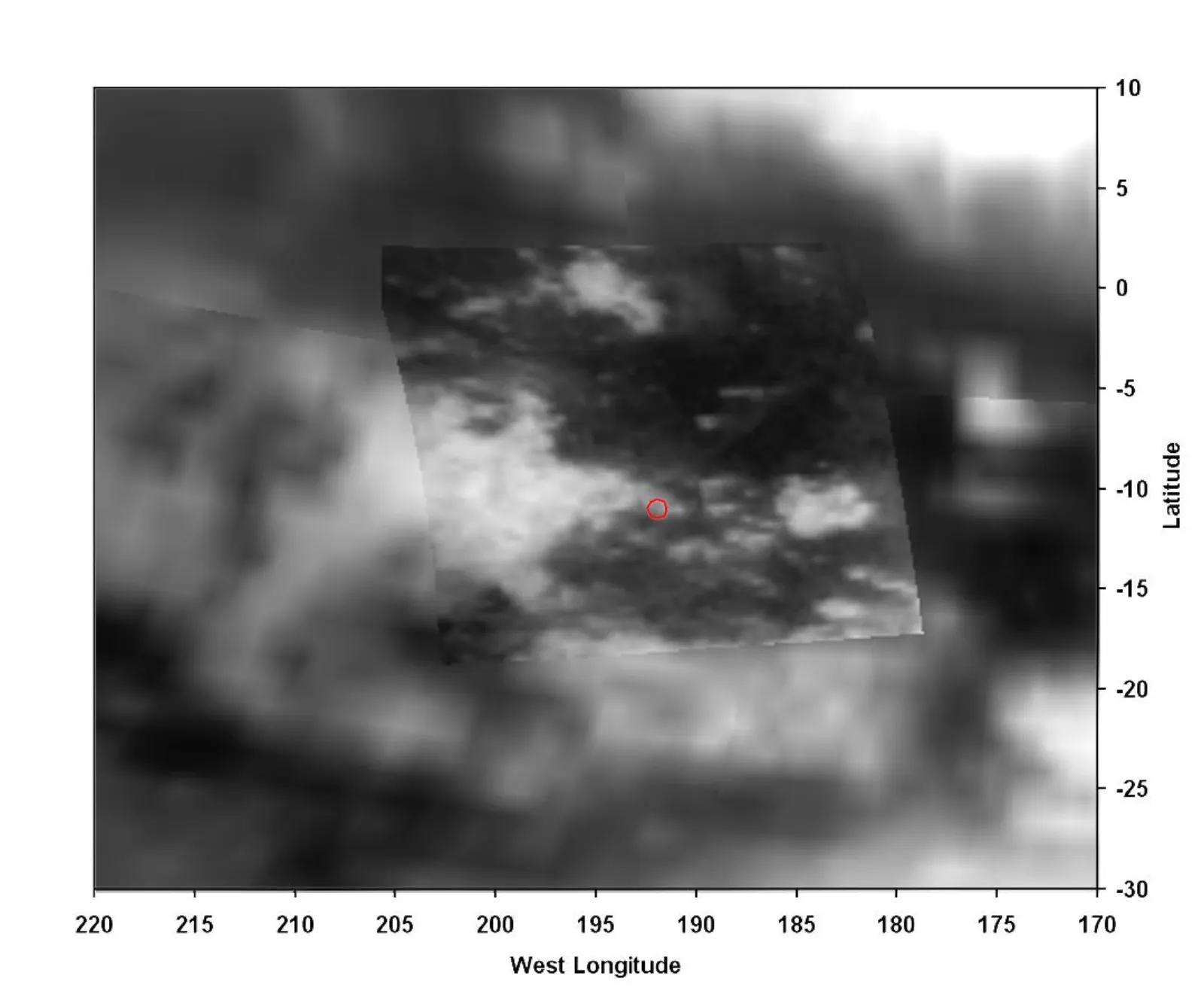
1 of 3 · swipe the photo aside, tap to look closer
A globe in your hands
Drag the globe to spin it. Tap a place and the globe turns to it.
For the curious
Titan is the second biggest moon in the solar system after Ganymede, and bigger than Mercury. Its air is mostly nitrogen like ours, but thicker: the pressure at the surface is one and a half times Earth's. The Huygens probe landed on Titan in January twenty oh five and sent back pictures of a stony plain with rounded pebbles of ice. Dragonfly is due to launch in twenty twenty-eight.
| Diameter | 5,150 km |
|---|---|
| Gravity | 1.4 m/s² |
| Day | 382.7 hours |
| Average temperature | -179 °C |
Astronaut exam
Find 5 more and we'll start the exam.
