 Growney Space
Jupiter
Jupiter is the fifth planet from the Sun and the biggest in the Solar System. It's a gas giant in cloud stripes with an enormous storm.
What's hidden on Jupiter?
Found 0 of 11
Swipe sideways and tap the seeds

Look for the seeds — I'll tell you about every wonder!
Field journal · Jupiter
Nothing yet. The wonders you find will be written here.
Peek at all the wonders
- Jupiter is so big that a thousand Earths could fit inside it.
- The Great Red Spot is a storm bigger than the whole Earth. It has been raging for hundreds of years!
- Jupiter spins the fastest of all the planets: a day here is less than 10 hours long.
- Jupiter has no ground to stand on — just clouds and gas, deeper and deeper.
- Jupiter has more than a hundred moons. It's like a little solar system!
- Jupiter's four biggest moons were spotted through a telescope by Galileo back in 1610.
- Jupiter's stripes are clouds racing around the planet on wild winds.
- Northern lights glow at Jupiter's poles — some of the brightest in the Solar System.
- Jupiter has rings too! They're thin and dark, so they were only found in 1979.
- Jupiter is heavier than all the other planets put together — more than twice over.
- Gravity here is more than twice as strong as on Earth — you'd barely get off the ground.
Jump on Earth and on Jupiter
Surfing the winds
Growney flies a probe through Jupiter's stripes. Switch stripe up or down, dodge the swirls and keep out of the Great Red Spot!
Find every wonder and the game opens! Seeds left: 11 of 11.
Expedition album
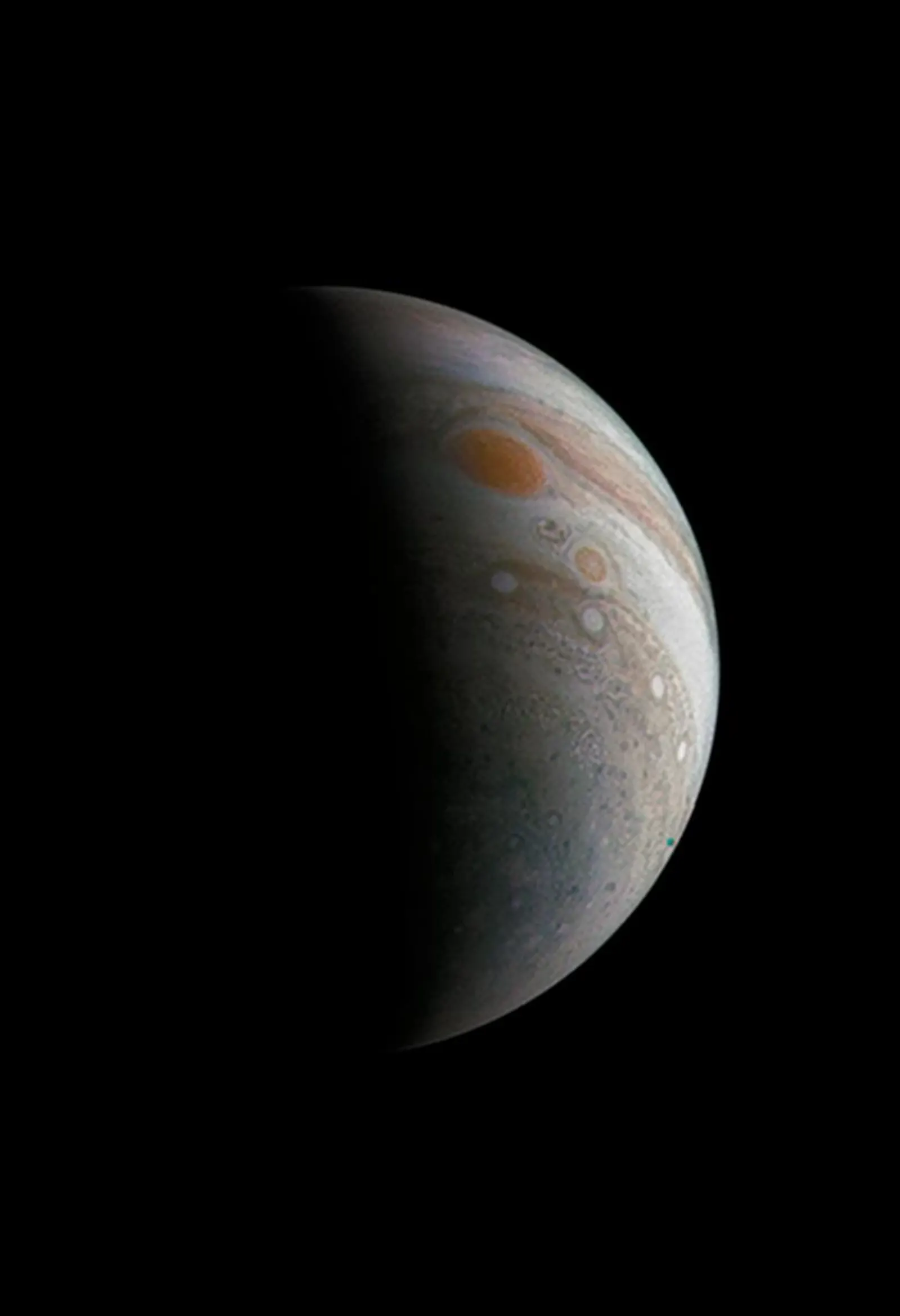
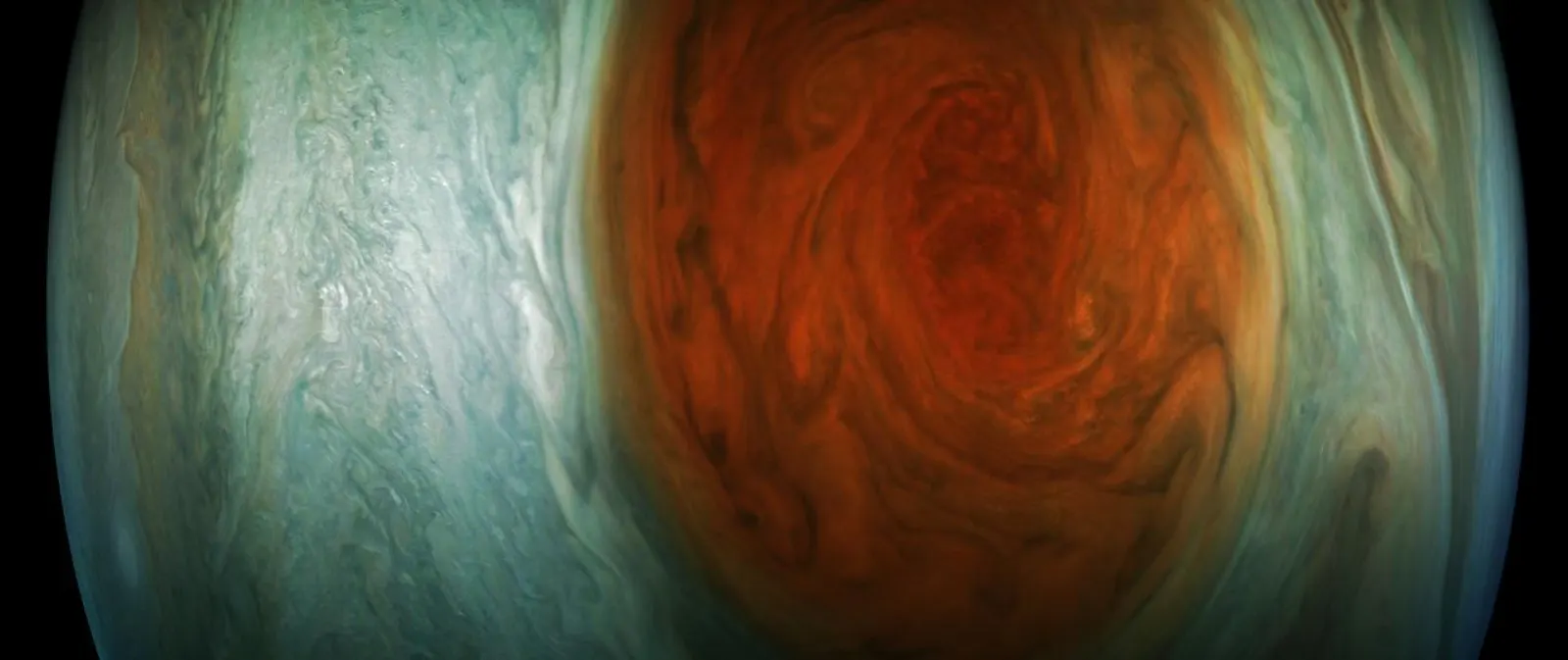
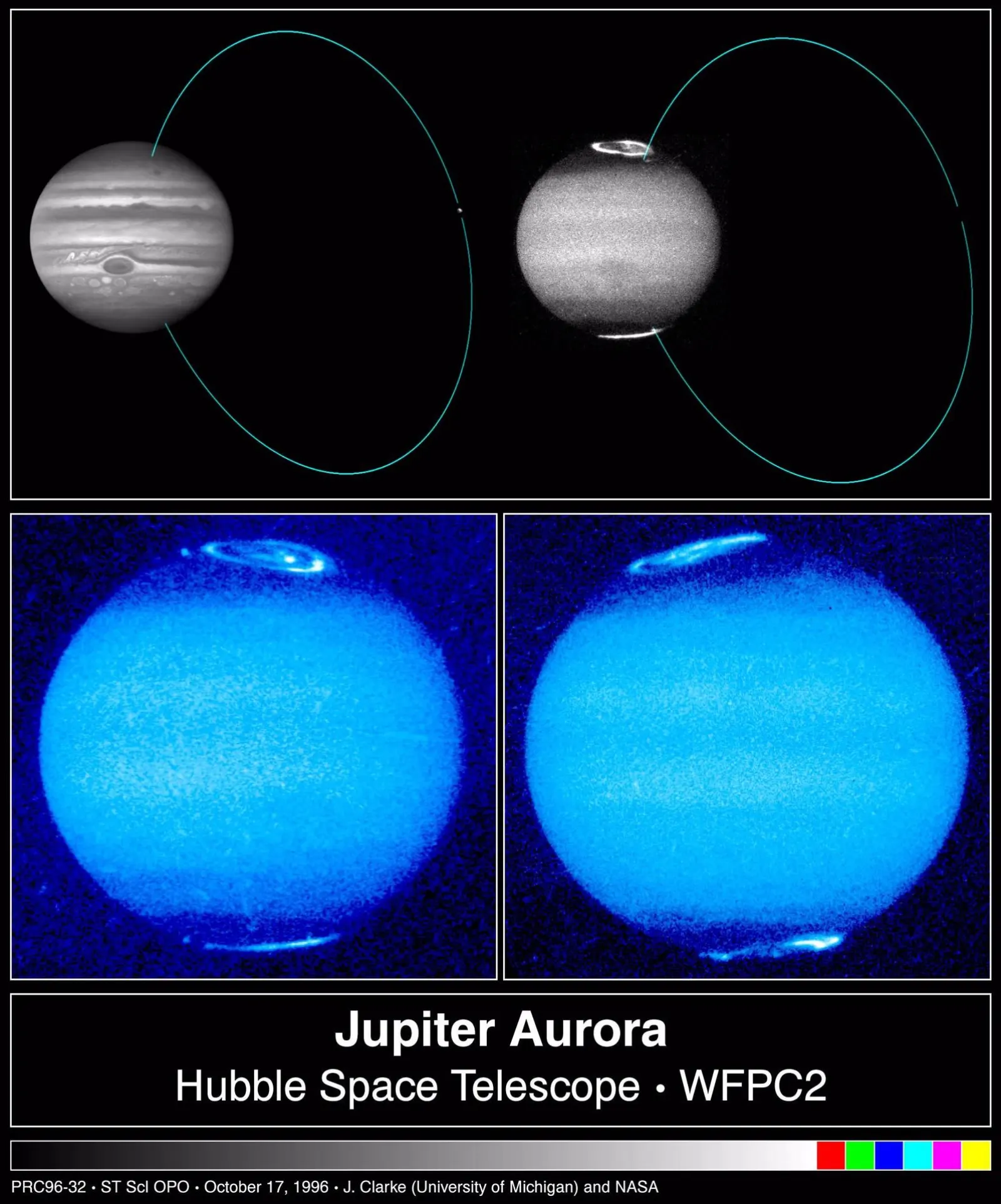
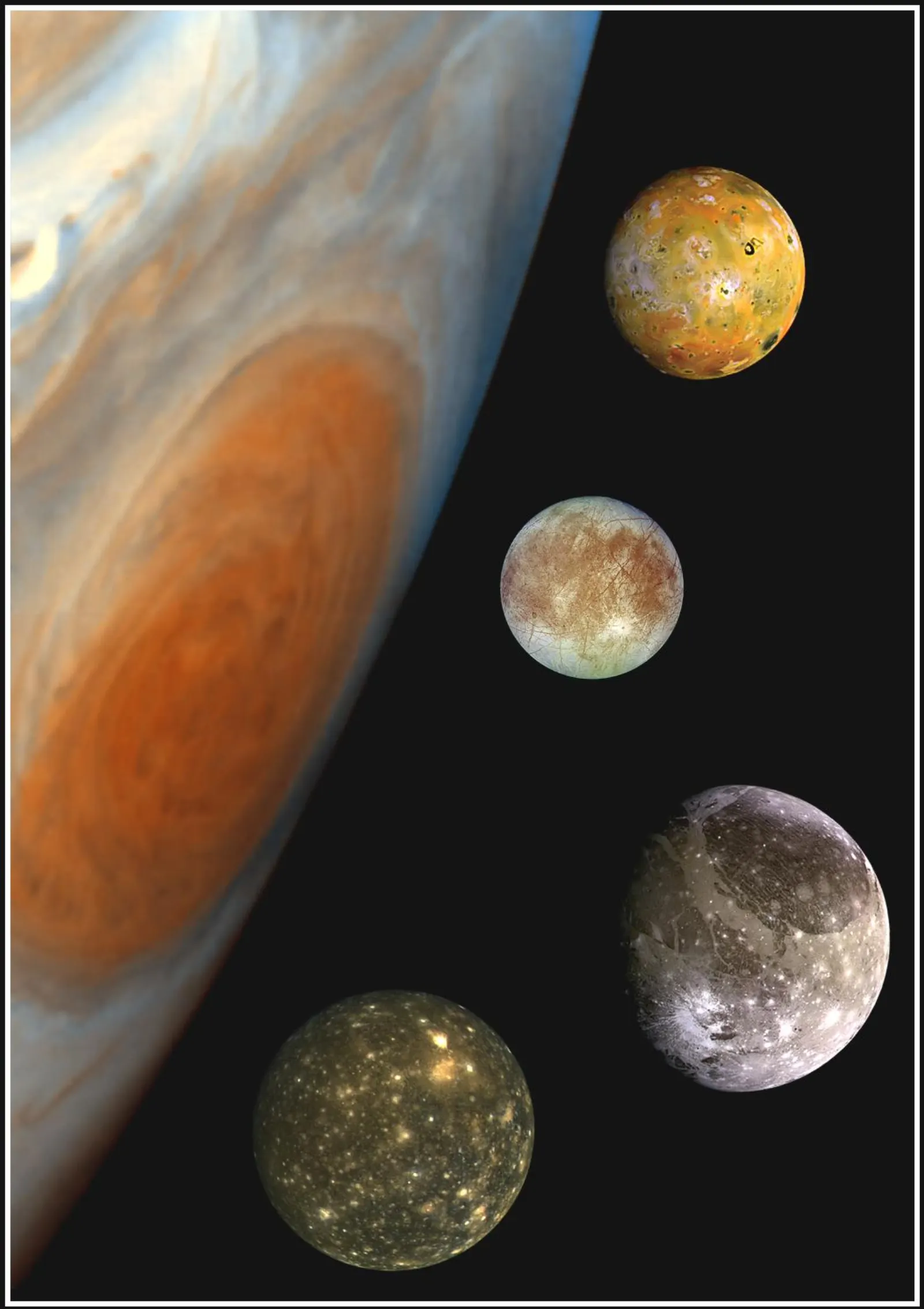
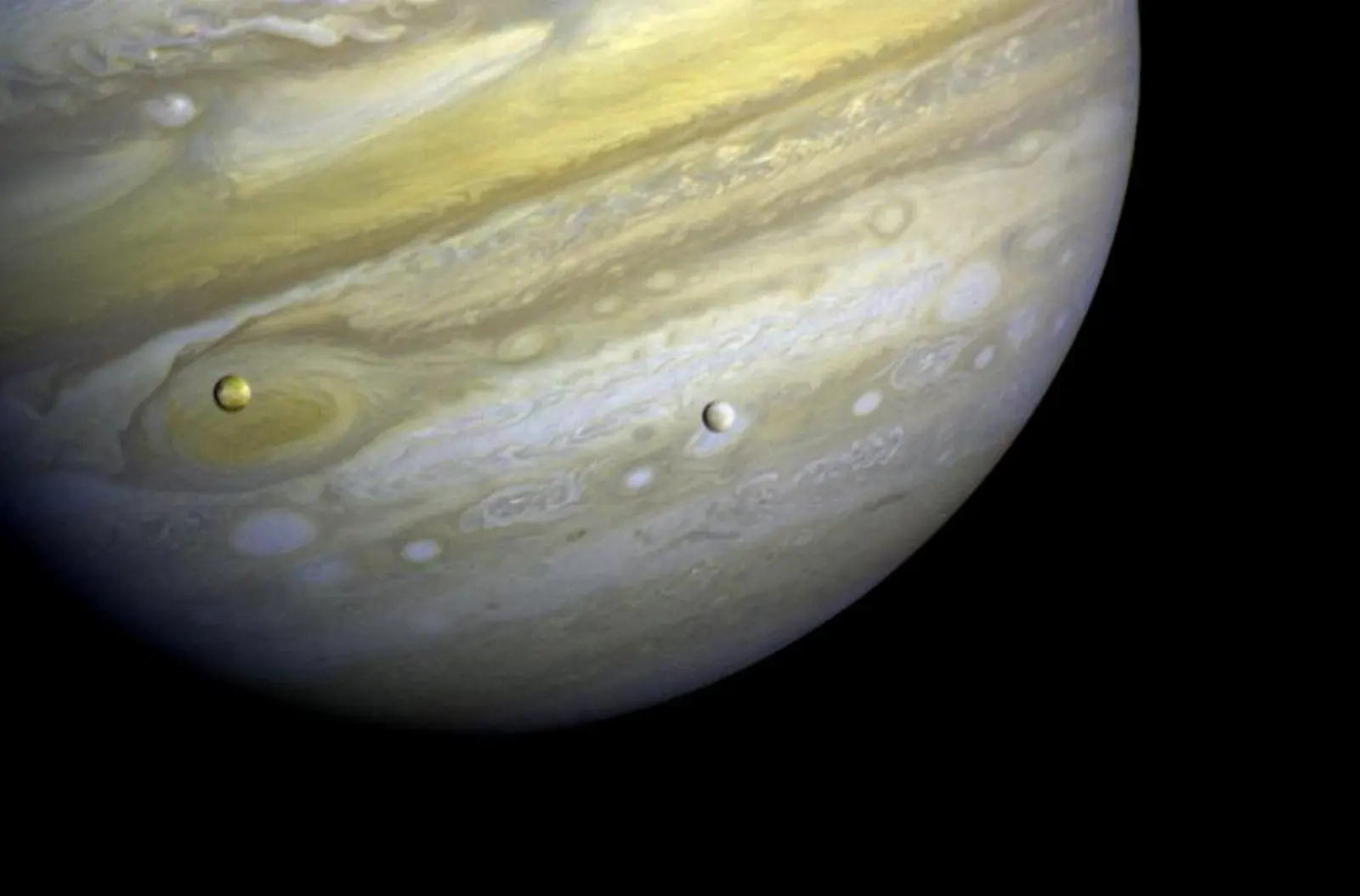
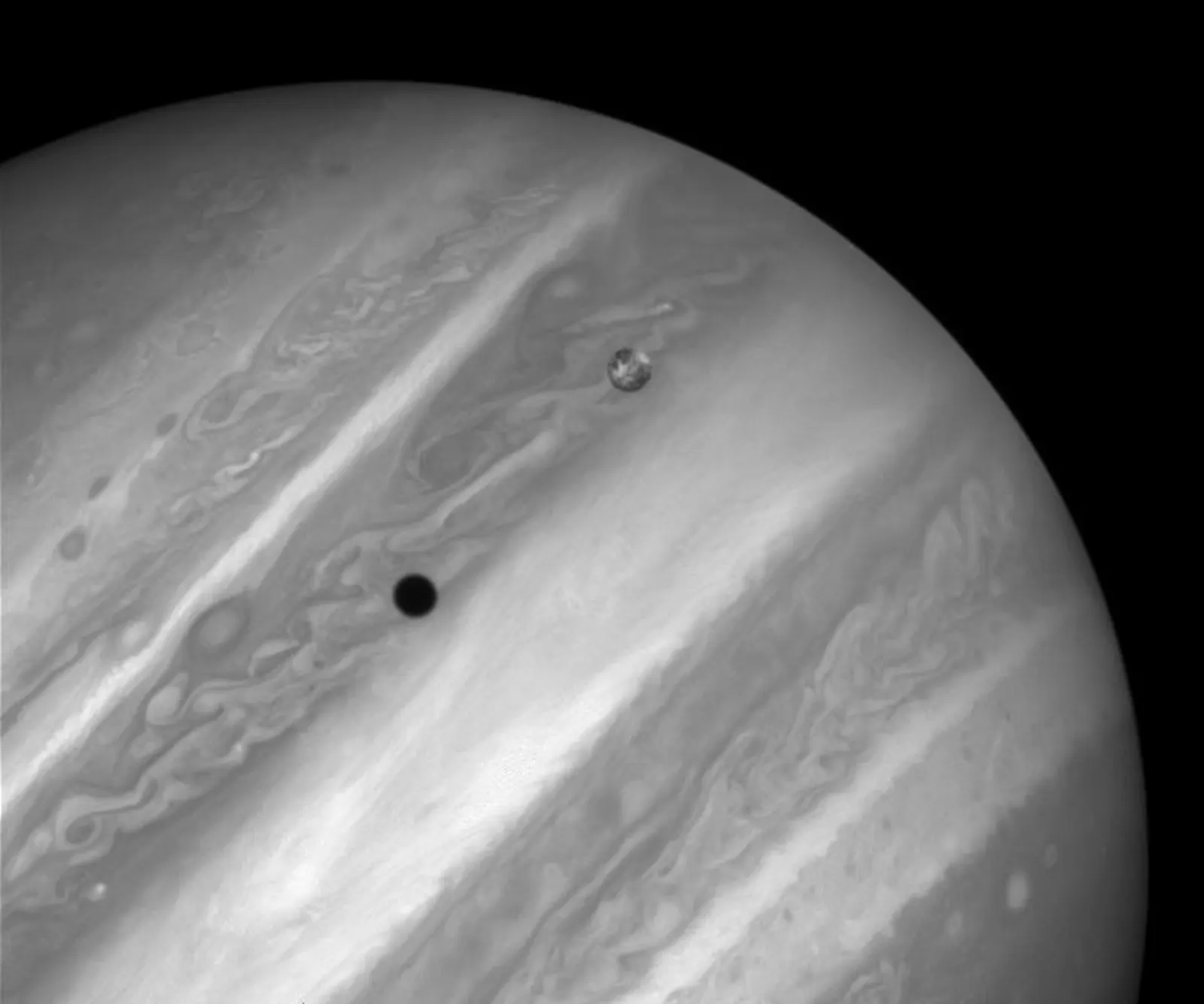
1 of 6 · swipe the photo aside, tap to look closer
A globe in your hands
Drag the globe to spin it. Tap a place and the globe turns to it.
For the curious
Jupiter is mostly hydrogen and helium, like the Sun. Under the clouds the gas is squeezed so hard it becomes liquid, and deep inside there may be a large core. The Juno spacecraft has been orbiting Jupiter since 2016, studying its clouds, magnetic field and core. A year on Jupiter lasts almost 12 Earth years.
| Diameter | 142,984 km |
|---|---|
| Gravity | 23.1 m/s² |
| Day | 9.9 hours |
| Year | 4,331 Earth days |
| From the Sun | 778.5 million km |
| Average temperature | -110 °C |
Astronaut exam
Find 5 more and we'll start the exam.
