 Growney Space
Io
Io is Jupiter's closest big moon. It is the most volcanic place in the solar system.
What's hidden on Io?
Found 0 of 10
Drag sideways to walk all the way round. Tap the seeds

Look for the seeds — I'll tell you about every wonder!
Field journal · Io
Nothing yet. The wonders you find will be written here.
Peek at all the wonders
- Io is the most volcanic place in the solar system. It has hundreds of volcanoes, and fountains of lava shoot dozens of kilometres high.
- Io is yellow and orange because of sulfur, the stuff that smells of matches. Even the "snow" here is sulfur.
- Jupiter pulls Io one way while Europa and Ganymede pull it another. The moon is squeezed and stretched, so inside it is hot.
- Io has lakes, but not of water: they are lakes of molten lava.
- Galileo saw Io more than four hundred years ago through one of the first telescopes, together with its three neighbouring moons.
- From here Jupiter is as wide as two hands at arm's length, almost forty times wider than our Moon in Earth's sky.
- I walked all the way round Io, and Jupiter disappeared! Io always keeps the same side towards Jupiter, so from the far side you never see the planet.
- Jupiter is so big that a thumb can't hide it. You would need a whole hand with the fingers spread.
- Io has almost no air, so even a volcano erupts in silence. Shout all you like: only the radio will hear you.
- Io goes round Jupiter in under two of our days, and its day lasts the same. The Sun sets before you have had a good sleep.
Experiments on Io
Lava fountains
Io's volcanoes erupt without warning, almost. Where smoke rises, a lava fountain is about to blow. Step aside and catch flakes of sulfur snow!
Find every wonder and the game opens! Seeds left: 10 of 10.
Expedition album
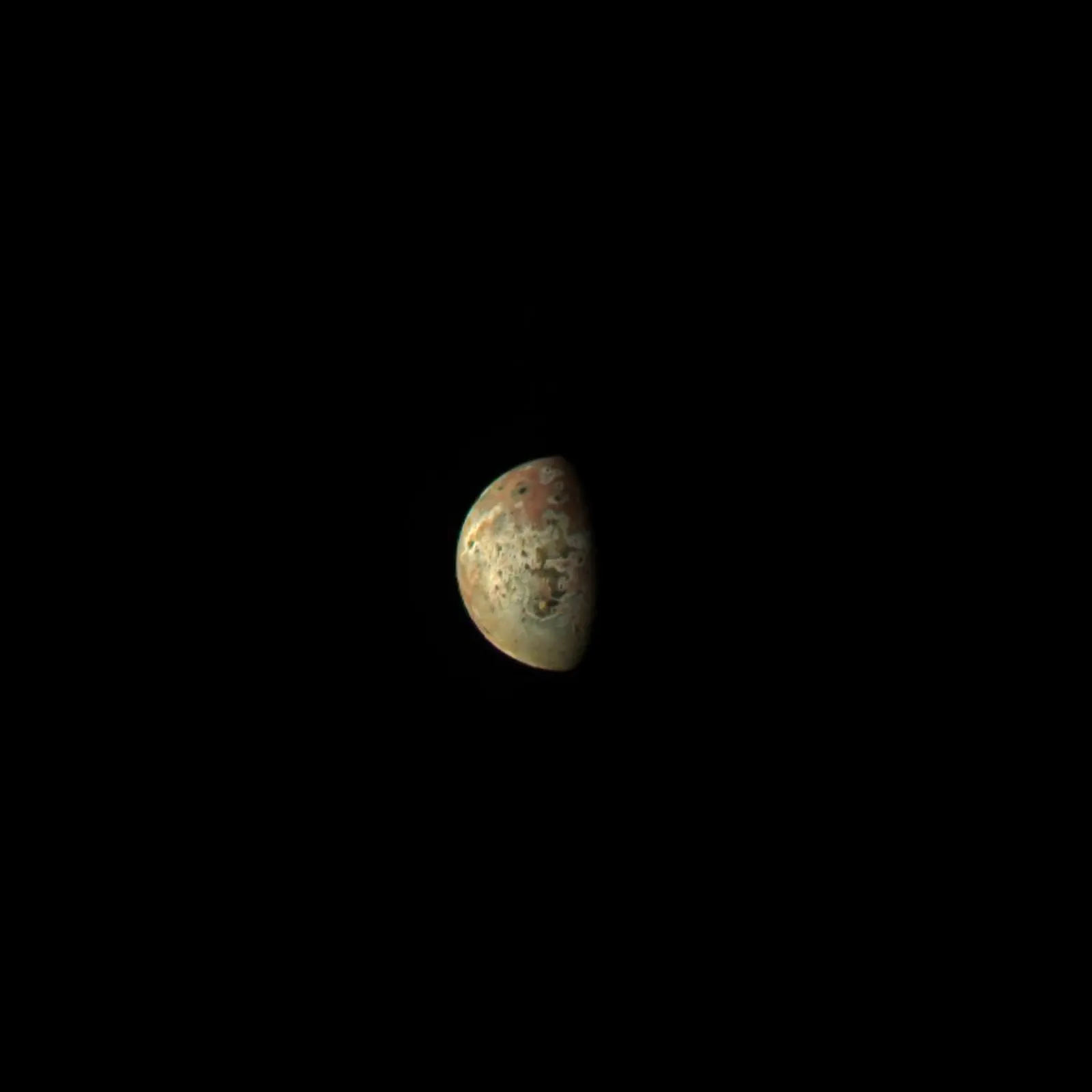
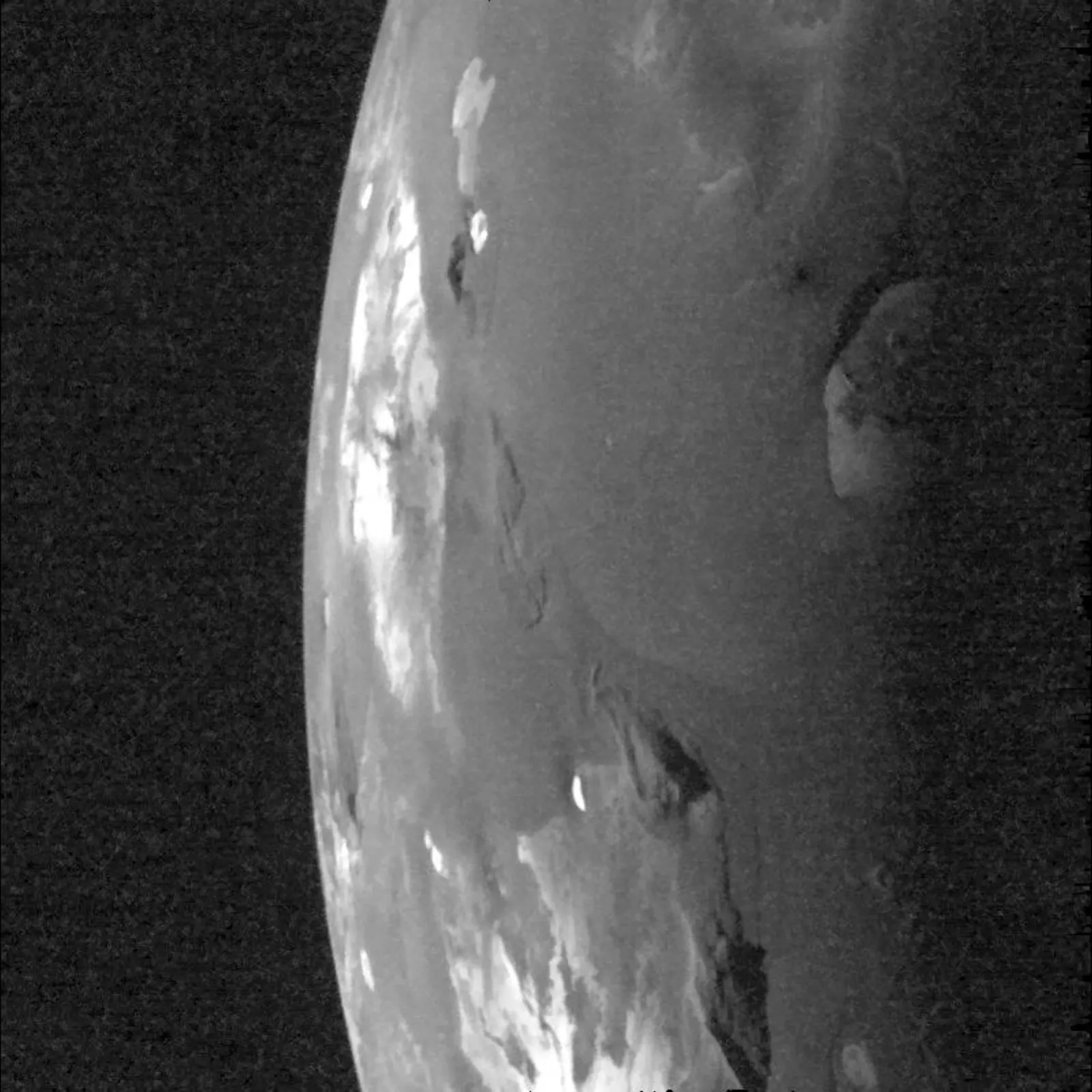
1 of 2 · swipe the photo aside, tap to look closer
A globe in your hands
Drag the globe to spin it. Tap a place and the globe turns to it.
For the curious
Io is a little bigger than our Moon. Voyager 1 spotted its volcanoes, and later the Galileo spacecraft studied it for years. The heat inside Io comes from tides: Jupiter and the neighbouring moons knead it without rest, and it warms up like modelling clay in your hands. Io's surface is constantly renewed by lava and sulfur, which is why it has almost no craters.
| Diameter | 3,643 km |
|---|---|
| Gravity | 1.8 m/s² |
| Day | 42.5 hours |
| Average temperature | -130 °C |
Astronaut exam
Find 5 more and we'll start the exam.
