 Growney Space
Ganymede
Ganymede is the largest moon in the solar system, bigger than Mercury. It is the only moon with a magnetic field of its own.
What's hidden on Ganymede?
Found 0 of 10
Drag sideways to walk all the way round. Tap the seeds

Look for the seeds — I'll tell you about every wonder!
Field journal · Ganymede
Nothing yet. The wonders you find will be written here.
Peek at all the wonders
- Ganymede is the largest moon in the solar system. It is bigger than the planet Mercury!
- Ganymede is the only moon with its own magnetic shield. Because of it, auroras glow near its poles.
- Ganymede is covered in grooves and stripes: old dark ice full of craters, and lighter younger ice, like patches on a blanket.
- Inside Ganymede, ice and water may lie in layers, like a club sandwich.
- At the very heart of Ganymede is an iron core. That is what makes the moon a magnet.
- From here Jupiter is a little smaller than a fist, but still almost fifteen times wider than our Moon.
- I walked all the way round Ganymede, and Jupiter disappeared! Ganymede always keeps the same side towards Jupiter, so from the far side the planet is never in the sky.
- From here Jupiter hides behind a fist. Try it!
- Deep under Ganymede's thick ice there is a salty ocean. It may hold more water than all of Earth's surface.
- A day on Ganymede lasts a week: three and a half days of light, three and a half of dark.
Experiments on Ganymede
Ice hops
Ganymede is big, but gravity here is weaker than on the Moon. Hop over the craters on the old ice and collect salty ice chips: the scientists want to know what's in the ocean under your feet!
Find every wonder and the game opens! Seeds left: 10 of 10.
Expedition album
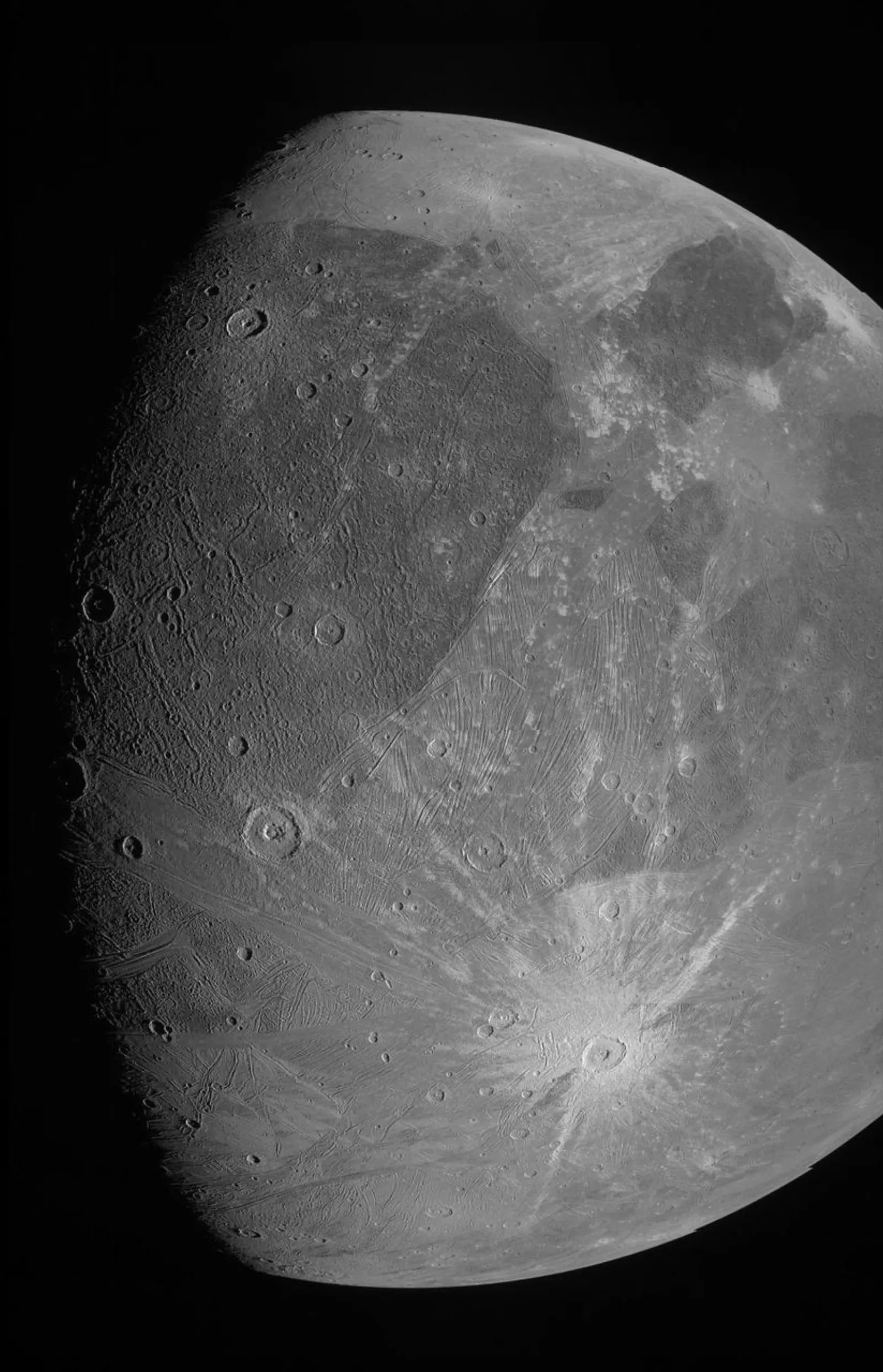
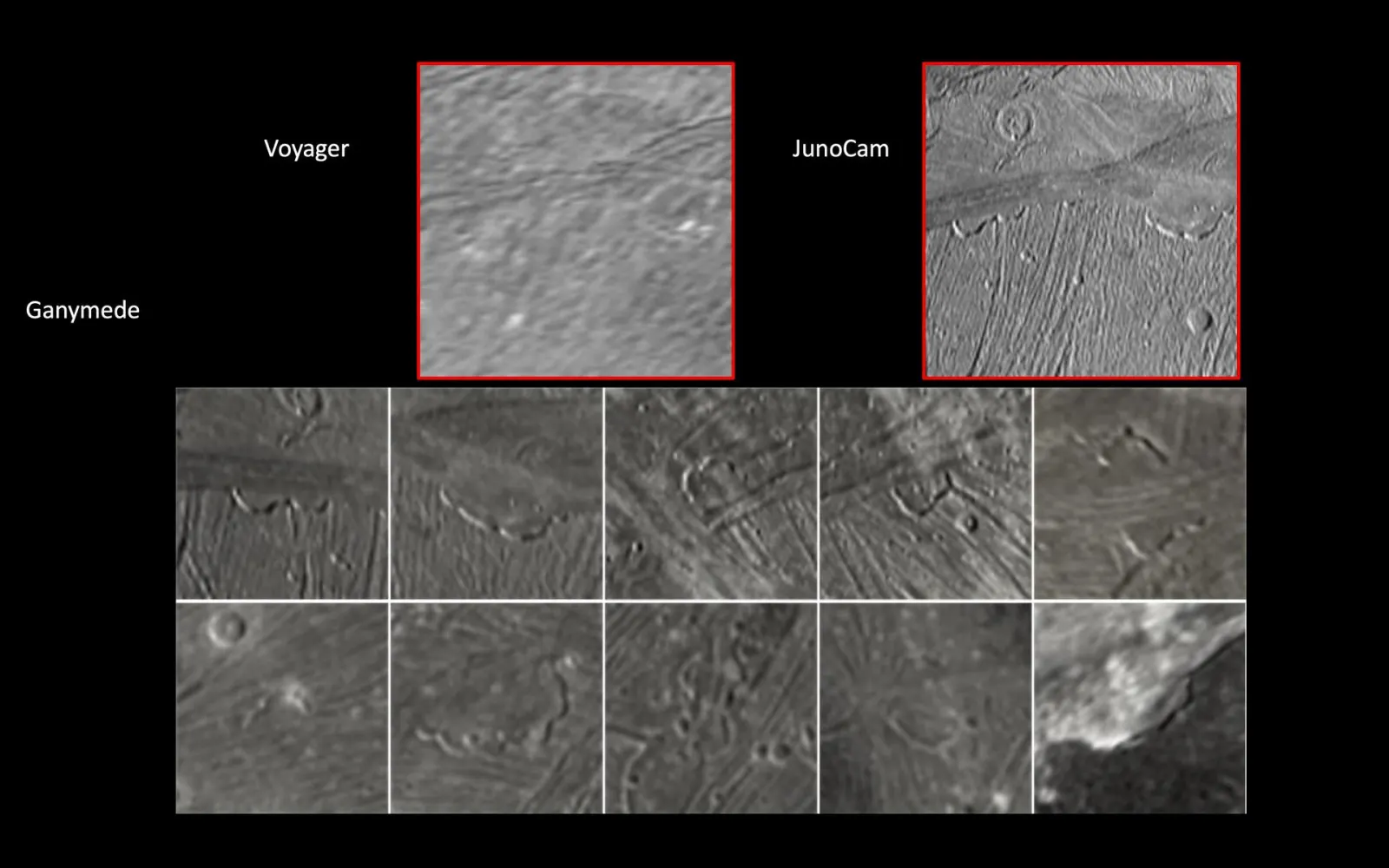
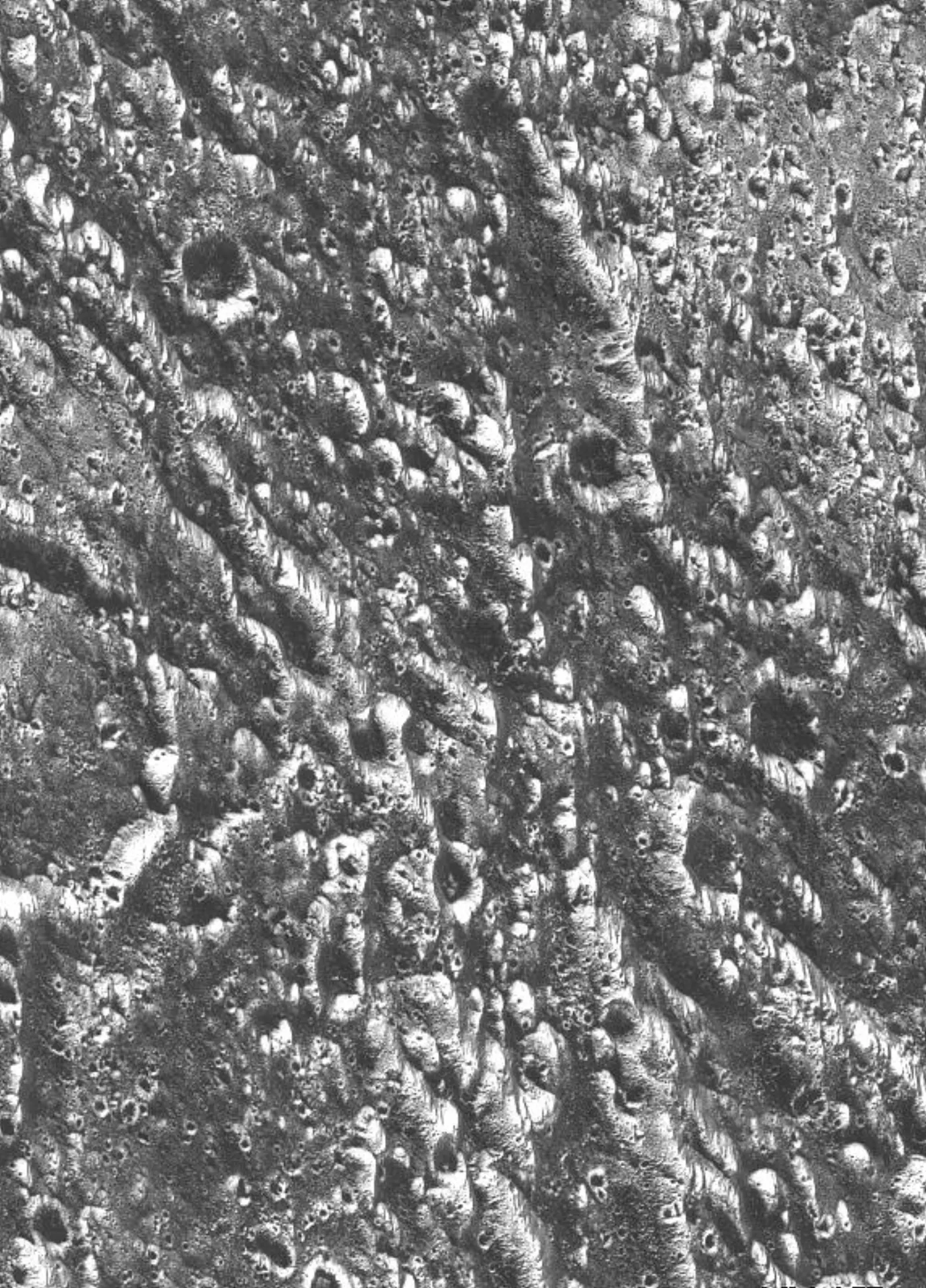
1 of 3 · swipe the photo aside, tap to look closer
A globe in your hands
Drag the globe to spin it. Tap a place and the globe turns to it.
For the curious
Ganymede is bigger than Mercury and Pluto, but lighter than Mercury, because half of it is ice. The Galileo spacecraft found its magnetic field, and the Hubble telescope watched its auroras. Ganymede's dark regions are very old and full of craters, while the bright grooves are younger: there the ice stretched and cracked. Europe's JUICE spacecraft is on its way to Ganymede and will become its satellite.
| Diameter | 5,262 km |
|---|---|
| Gravity | 1.4 m/s² |
| Day | 171.7 hours |
| Average temperature | -150 °C |
Astronaut exam
Find 5 more and we'll start the exam.
