 Growney Space
Callisto
Callisto is the farthest of Jupiter's four big moons. It is the most cratered world in the solar system.
What's hidden on Callisto?
Found 0 of 10
Drag sideways to walk all the way round. Tap the seeds

Look for the seeds — I'll tell you about every wonder!
Field journal · Callisto
Nothing yet. The wonders you find will be written here.
Peek at all the wonders
- Callisto is the most heavily cratered world in the solar system. Its surface is very old, and nothing wipes away the marks of impacts.
- Callisto's biggest crater looks like a target: rings spread out from the impact like ripples from a stone in water.
- Callisto is dark and dusty, the darkest of Jupiter's four big moons.
- Callisto has chains of craters in a row: that is how the pieces of a comet fell after Jupiter tore it apart.
- Galileo saw Callisto more than four hundred years ago. Almost four hundred years later, a spacecraft named after him came here.
- From here Jupiter is the size of half a fist, half as big as from Ganymede, because Callisto is farther out than the others.
- I walked all the way round Callisto, and Jupiter disappeared! Callisto always keeps the same side towards Jupiter, so from the far side you can't see it.
- From here Jupiter hides easily behind a fist, with room to spare.
- Callisto is far from its planet: thirteen Jupiters in a row would fit between it and Jupiter.
- A day on Callisto lasts more than two weeks: eight days of light, eight of night.
Experiments on Callisto
Pebble into orbit
Gravity on Callisto is weak, so you can throw a pebble so that it circles the moon and becomes its own little satellite. Hold the button to wind up and let go, not too soft and not too hard!
Find every wonder and the game opens! Seeds left: 10 of 10.
Expedition album
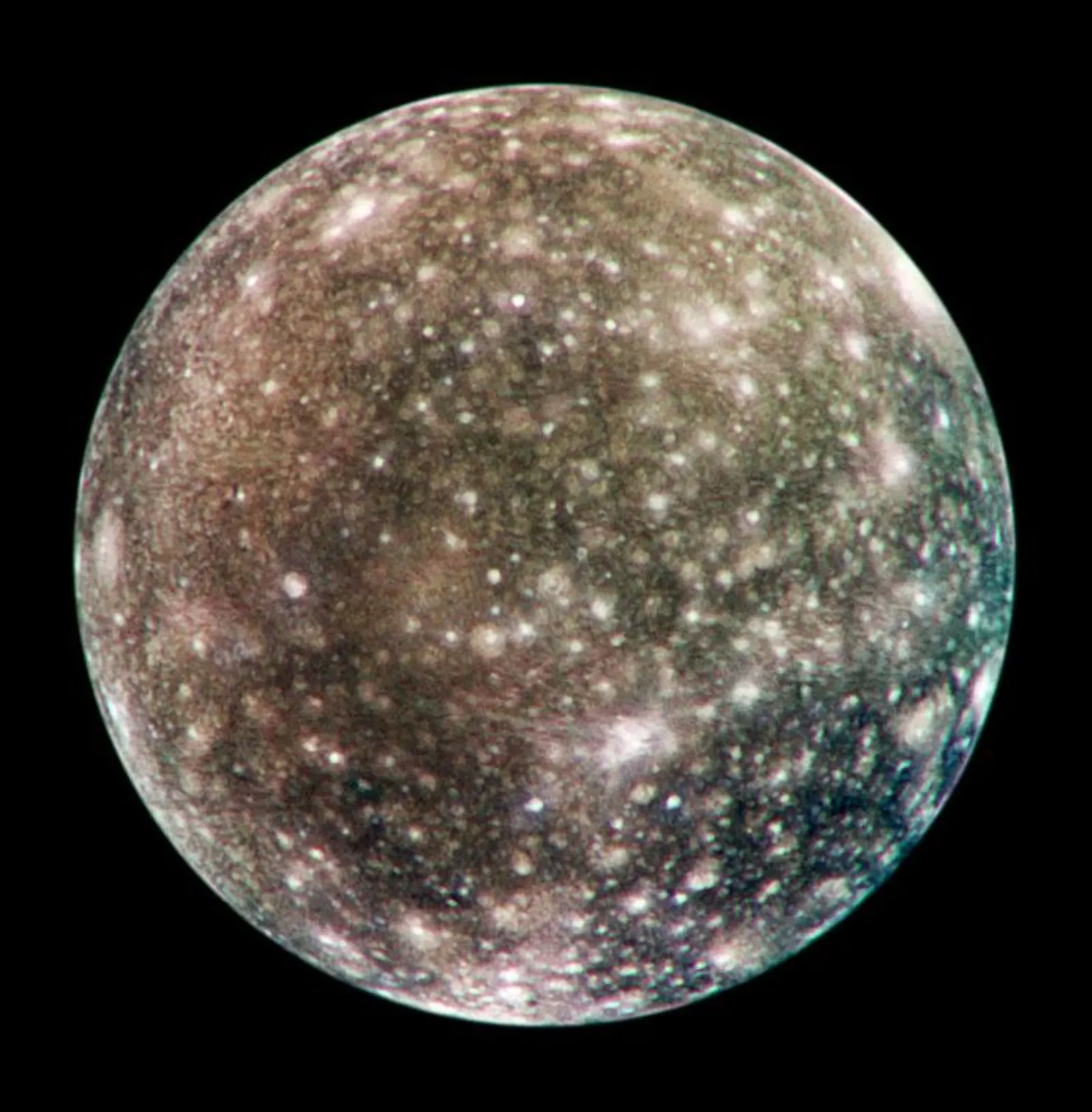
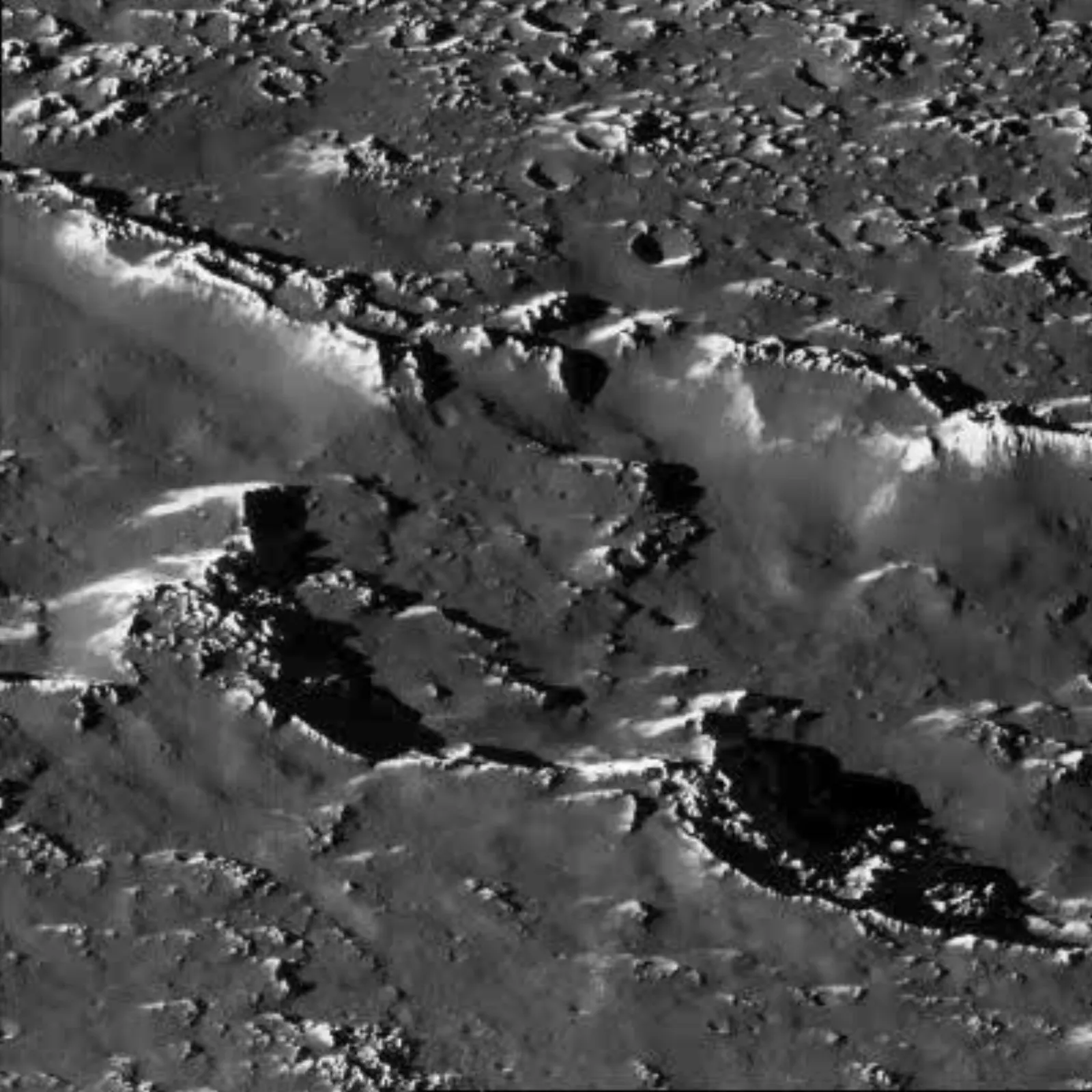
1 of 2 · swipe the photo aside, tap to look closer
A globe in your hands
Drag the globe to spin it. Tap a place and the globe turns to it.
For the curious
Callisto is almost as big as Mercury. It is so far from Jupiter that the tides neither knead nor warm it, so inside it is calm and cold, and its surface has not changed for billions of years. The Galileo spacecraft noticed that there may be a salty ocean under Callisto's ice too. Because it is calm and far from Jupiter's radiation, Callisto is thought a good place for a future base.
| Diameter | 4,821 km |
|---|---|
| Gravity | 1.2 m/s² |
| Day | 400.5 hours |
| Average temperature | -140 °C |
Astronaut exam
Find 5 more and we'll start the exam.
