 Growney Space
Europa
Europa is an icy moon of Jupiter. Beneath its ice hides a salty ocean where there might be life.
What's hidden on Europa?
Found 0 of 10
Drag sideways to walk all the way round. Tap the seeds

Look for the seeds — I'll tell you about every wonder!
Field journal · Europa
Nothing yet. The wonders you find will be written here.
Peek at all the wonders
- Europa is covered in ice, and the ice is covered in long brown cracks. The ice breaks and shifts because underneath it there is no rock, only water.
- Europa's surface is very smooth, with hardly any craters: the ice keeps renewing itself and smoothing over old marks.
- Under Europa's ice there is twice as much water as in all of Earth's oceans put together.
- The Europa Clipper spacecraft is already on its way. It will check whether anything could live here, circling Jupiter for several years.
- On Europa's surface it is about one hundred and sixty degrees below zero. The ice here is as hard as rock.
- From here Jupiter is the size of a fist at arm's length, more than twenty times wider than our Moon.
- I walked all the way round Europa, and Jupiter disappeared! Europa always keeps the same side towards Jupiter, so from the far side you can't see it.
- Europa's ice is fifteen to twenty kilometres thick, with an ocean a hundred kilometres deep below. The deepest point of Earth's ocean wouldn't even reach the bottom of the ice.
- Jupiter is just about the size of a fist: stretch out your arm and it hides behind it.
- A day on Europa lasts a little under two of our days, and then it is night for just as long.
Experiments on Europa
Under the ice
One day a sub will dive under Europa's ice into the ocean. Hold to rise, let go to sink, pass between the ice pillars and collect water samples!
Find every wonder and the game opens! Seeds left: 10 of 10.
Expedition album
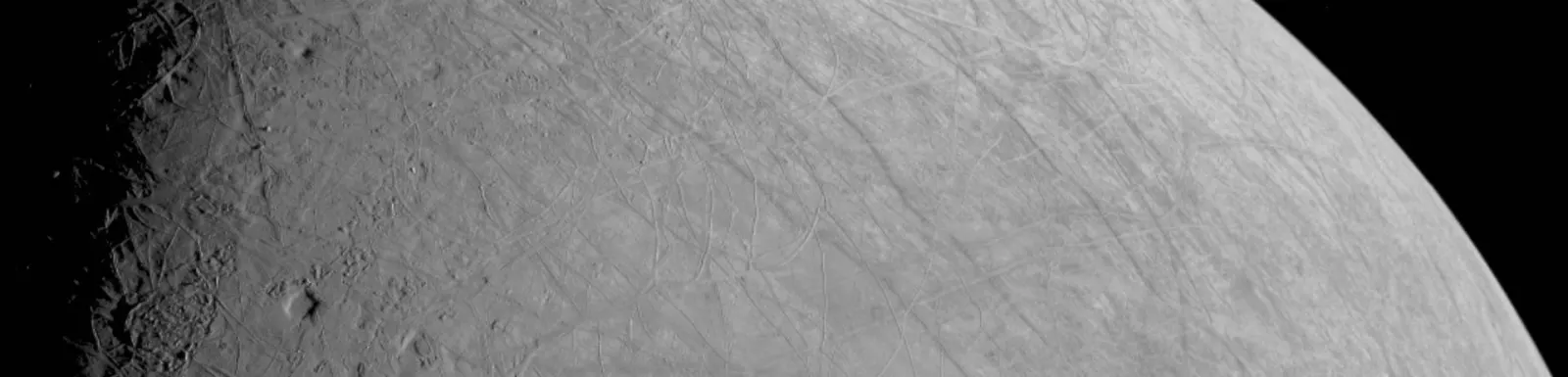
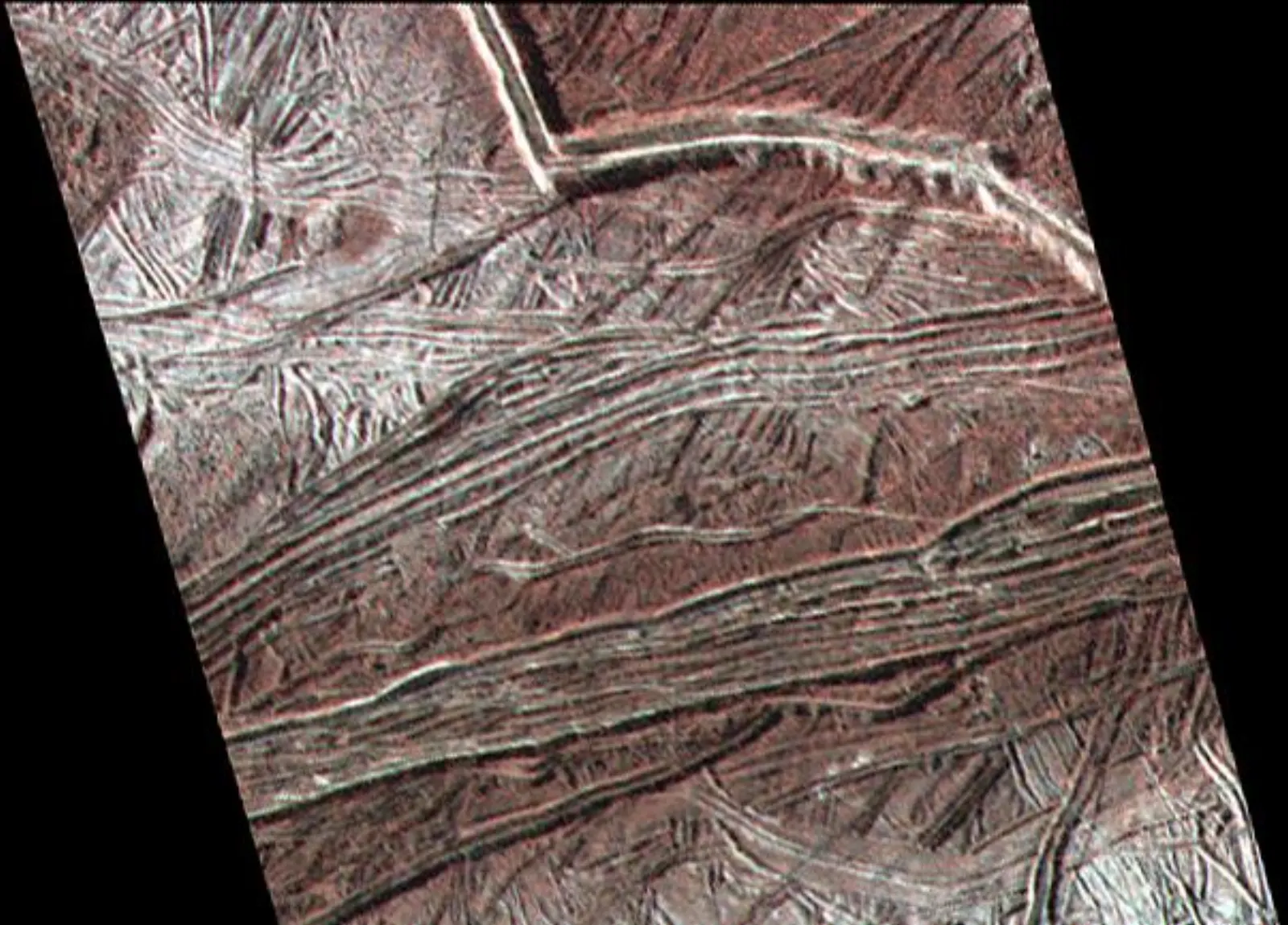
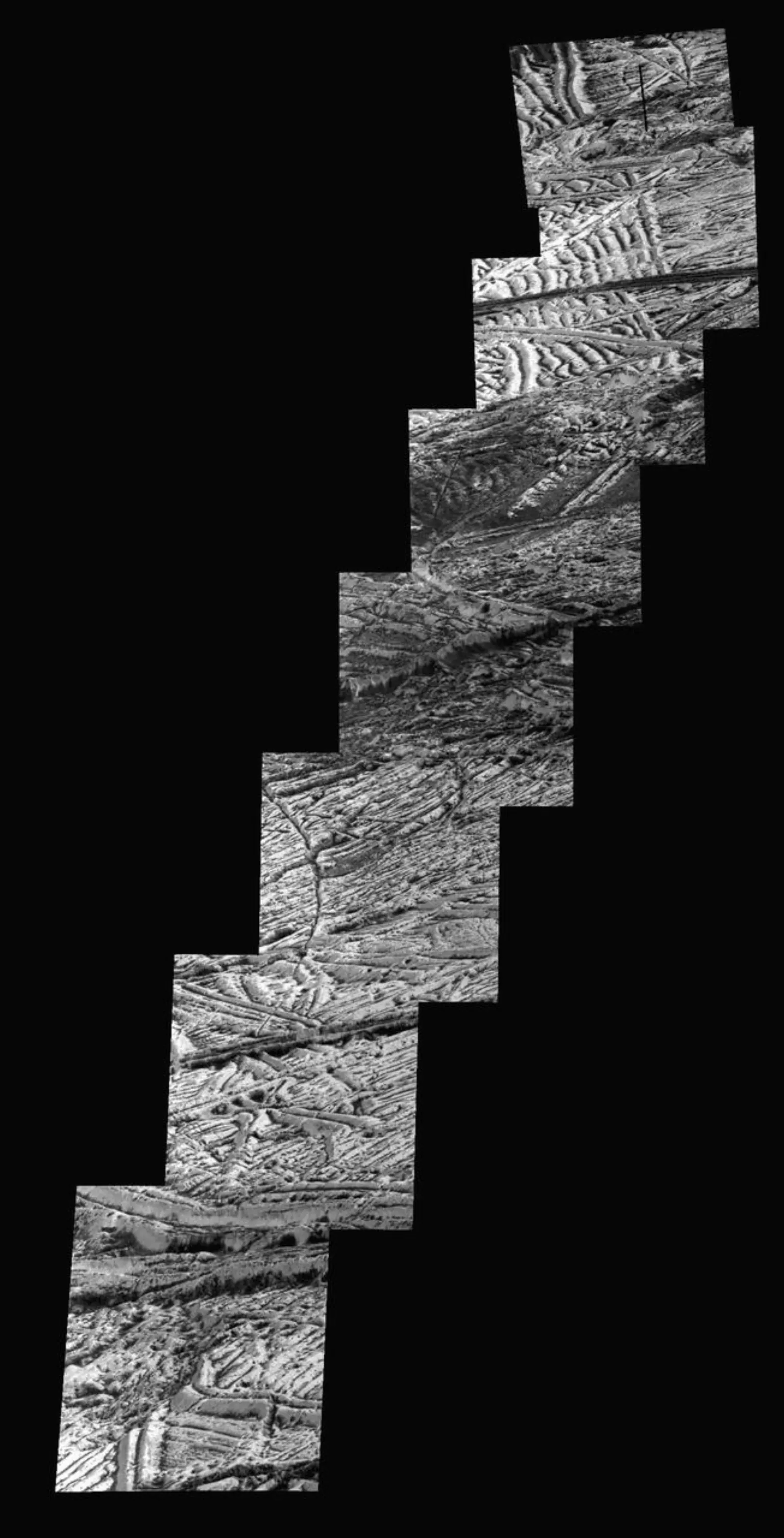
1 of 3 · swipe the photo aside, tap to look closer
A globe in your hands
Drag the globe to spin it. Tap a place and the globe turns to it.
For the curious
Europa is a little smaller than our Moon. Its ocean doesn't freeze because Jupiter's tides warm the moon from inside. There may be hot springs on the ocean floor, like on Earth, and tiny creatures could live in such water. The Europa Clipper spacecraft left Earth in the autumn of twenty twenty-four and will reach Jupiter in twenty thirty.
| Diameter | 3,122 km |
|---|---|
| Gravity | 1.3 m/s² |
| Day | 85.2 hours |
| Average temperature | -160 °C |
Astronaut exam
Find 5 more and we'll start the exam.
