 Growney Space
Titania
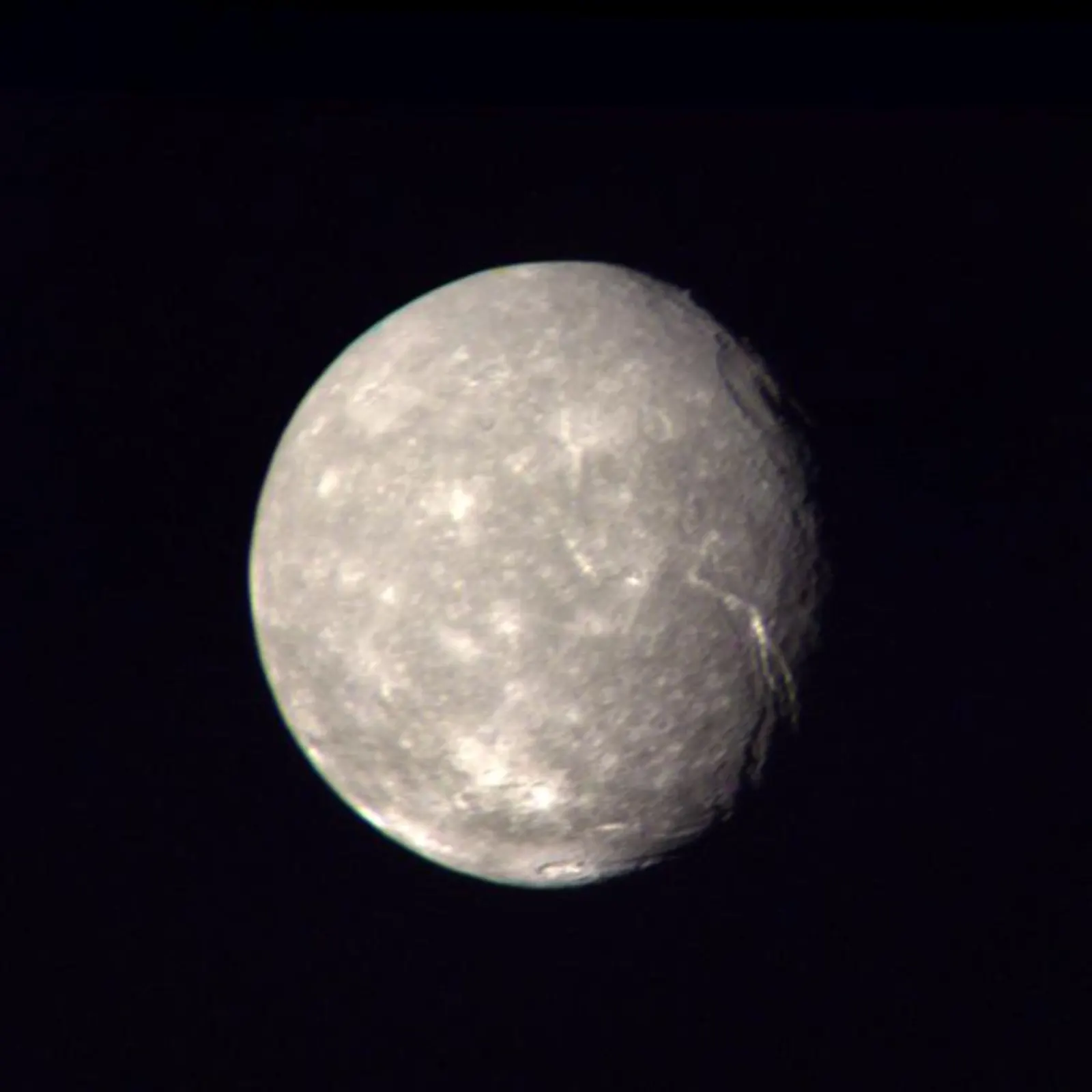
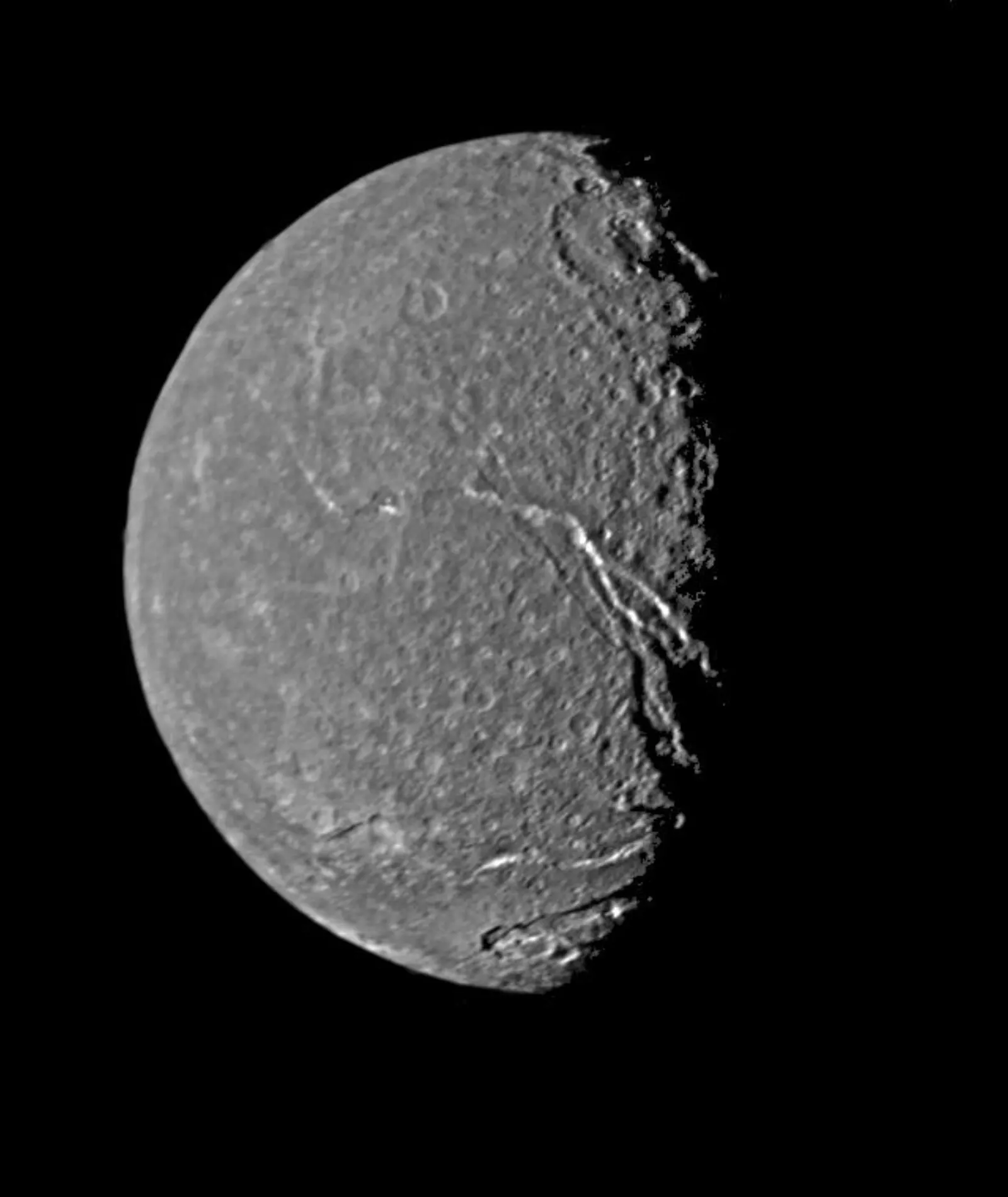
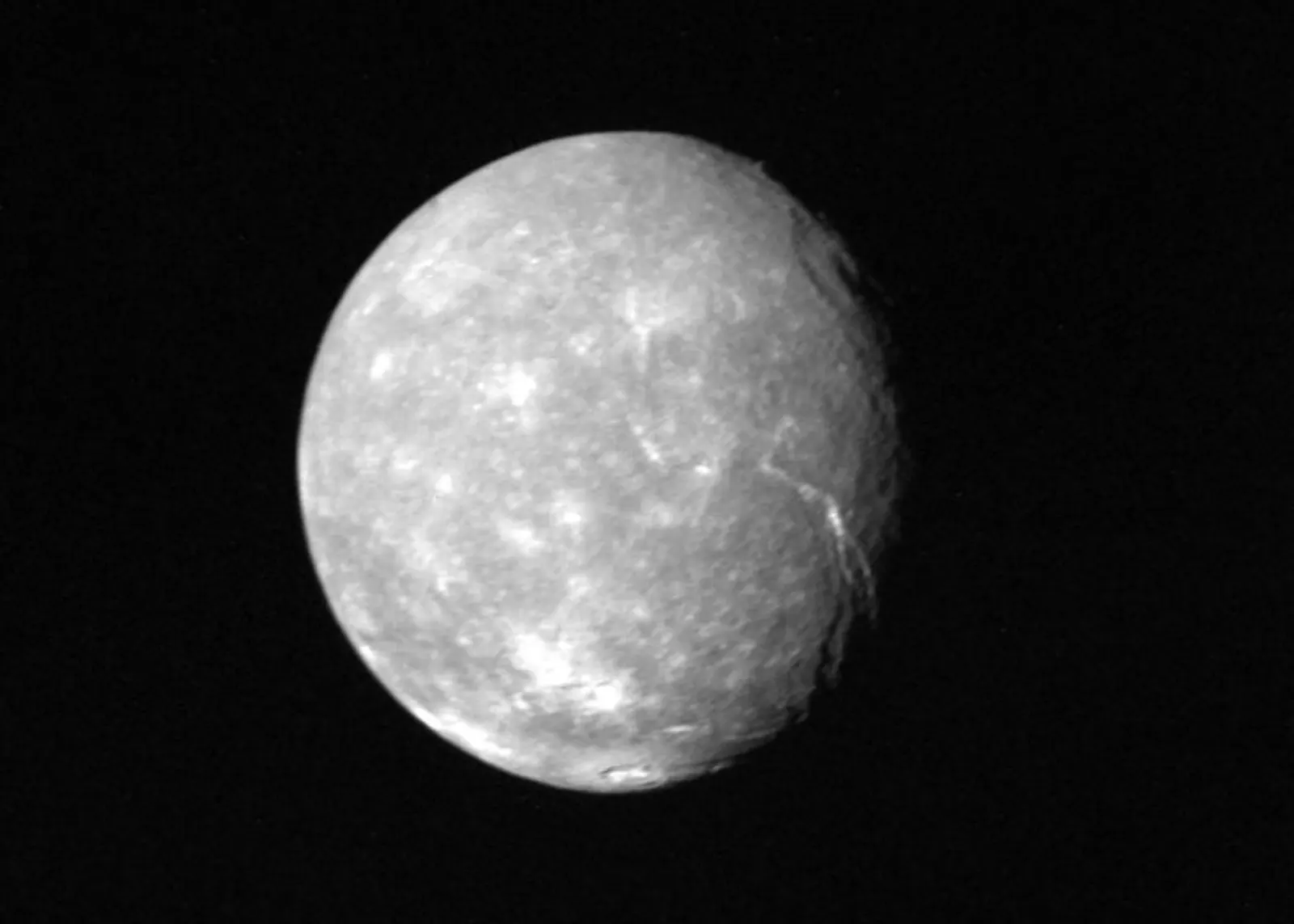
Titania is the largest moon of Uranus. A grey ball of ice cut by long valleys.
What's hidden on Titania?
Found 0 of 10
Drag sideways to walk all the way round. Tap the seeds

Look for the seeds — I'll tell you about every wonder!
Field journal · Titania
Nothing yet. The wonders you find will be written here.
Peek at all the wonders
- Huge fault valleys cross Titania. Some run for more than fifteen hundred kilometres.
- On the valley walls that face the Sun, frost glitters.
- Titania is named after the queen of the fairies in Shakespeare's play A Midsummer Night's Dream. All the moons of Uranus have names from his books.
- Titania is the largest moon of Uranus, but still half the size of our Moon.
- Titania is grey, like most of Uranus's moons, and very cold: about two hundred degrees below zero.
- From here Uranus is a little smaller than a fist, like Jupiter from Ganymede, only blue-green and on its side.
- I walked all the way round Titania, and Uranus disappeared! Titania always keeps the same side towards Uranus, so from the far side you can't see it.
- From here Uranus hides behind a fist. Try it!
- A day on Titania lasts almost nine of our days: four days of light, four of night.
- Almost nine Uranuses in a row would fit between Titania and Uranus.
Experiments on Titania
Pebble into orbit
Gravity on Titania is weak, so you can throw a pebble so that it circles the moon and becomes its own little satellite. Hold the button to wind up and let go, not too soft and not too hard!
Find every wonder and the game opens! Seeds left: 10 of 10.
Expedition album
1 of 3 · swipe the photo aside, tap to look closer
A globe in your hands
Drag the globe to spin it. Tap a place and the globe turns to it.
For the curious
William Herschel discovered Titania six years after he found Uranus itself. Its only close-up pictures were taken by Voyager 2 in January nineteen eighty-six. The valleys show that Titania's surface once stretched and cracked: the moon was geologically alive. Titania is half ice and half rock.
| Diameter | 1,578 km |
|---|---|
| Gravity | 0.4 m/s² |
| Day | 208.9 hours |
| Average temperature | -200 °C |
Astronaut exam
Find 5 more and we'll start the exam.
