 Growney Space
Miranda
Miranda is a small moon of Uranus with the strangest surface: patches, grooves and giant cliffs.
What's hidden on Miranda?
Found 0 of 10
Drag sideways to walk all the way round. Tap the seeds

Look for the seeds — I'll tell you about every wonder!
Field journal · Miranda
Nothing yet. The wonders you find will be written here.
Peek at all the wonders
- Miranda looks stitched together from patches: plains, grooves and ridges meet along sharp edges, as if the moon was smashed and glued back together.
- Miranda's canyons are twelve times as deep as the Grand Canyon on Earth.
- One of Miranda's patches looks like a giant chevron, a corner of light and dark stripes.
- Only Voyager 2 has seen Miranda up close. It flew past forty years ago and took all the pictures we have.
- Miranda is seven times smaller than our Moon. For such a small world it has a surprisingly wild history.
- From here Uranus is two hands wide, blue-green, and lying on its side, so its thin rings stand upright.
- I walked all the way round Miranda, and Uranus disappeared! Miranda always keeps the same side towards Uranus, so from the far side you can't see it.
- The highest cliffs in the solar system are here. A rock dropped off the edge would fall for a full ten minutes.
- Uranus can't hide behind a fist: it is two hands wide.
- Miranda's day is a little longer than ours: thirty-four hours.
Experiments on Miranda
Pebble into orbit
On Miranda gravity barely holds on, so you can throw a pebble so that it circles the moon and becomes its own little satellite. Hold the button to wind up and let go, not too soft and not too hard!
Find every wonder and the game opens! Seeds left: 10 of 10.
Expedition album
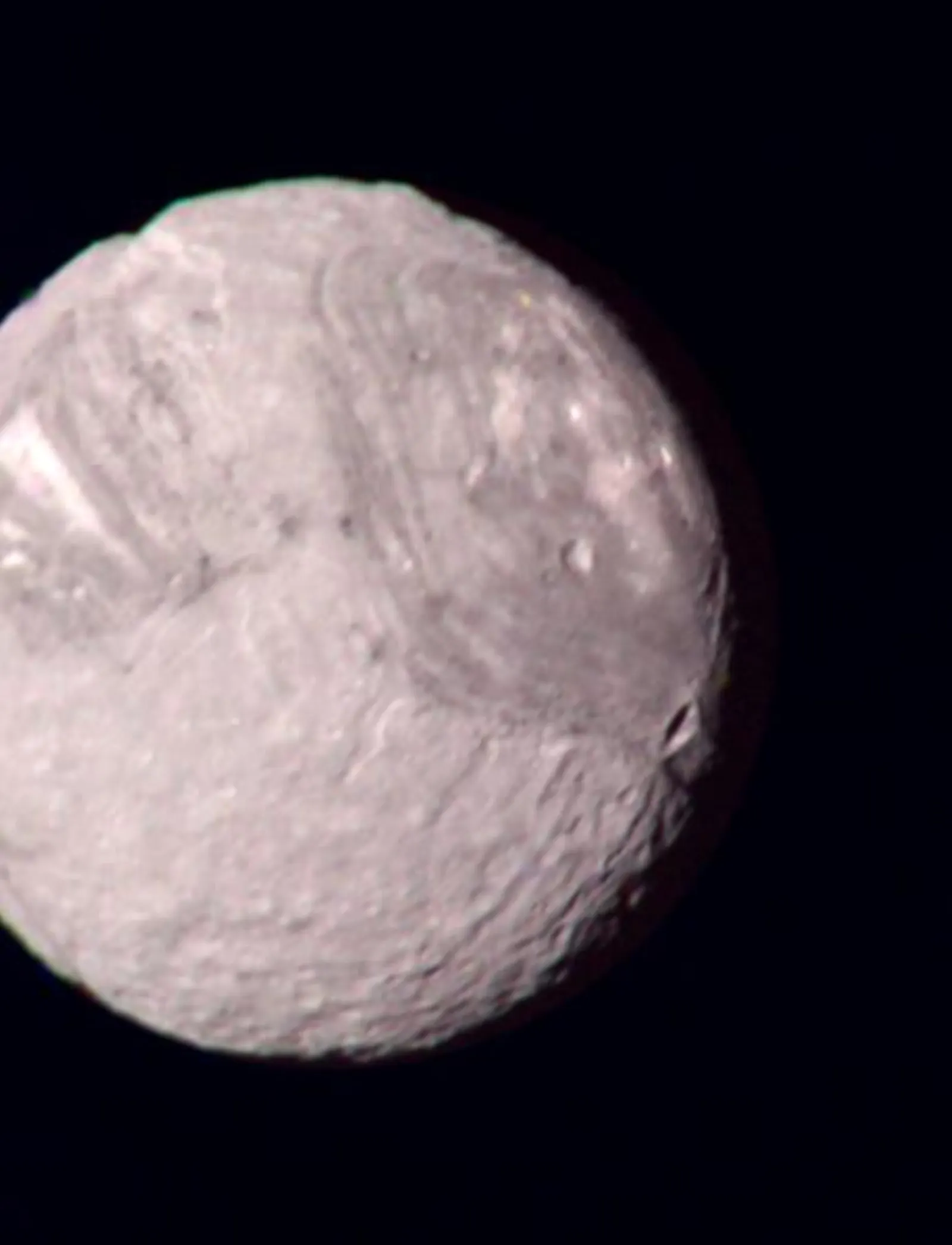
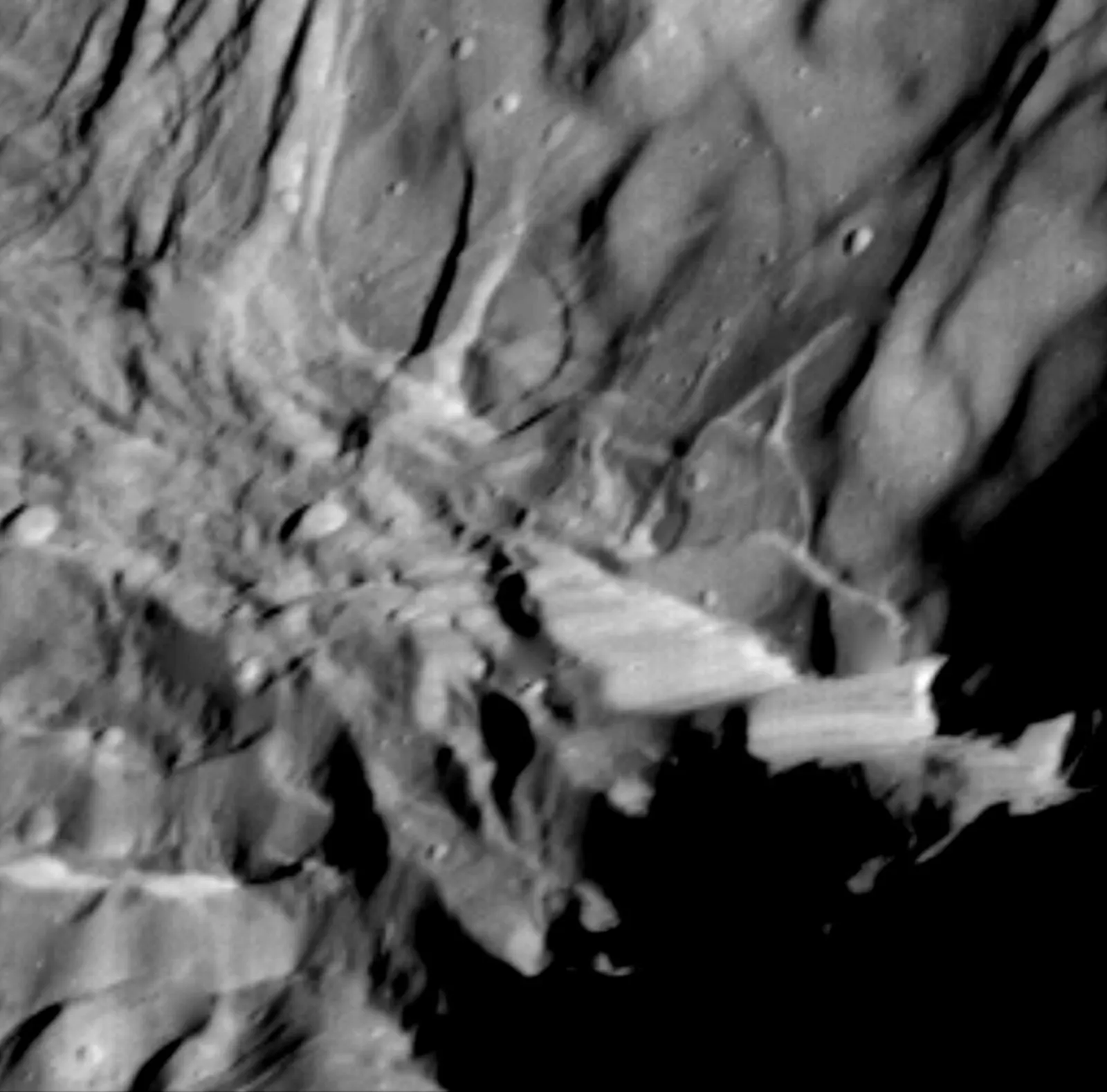
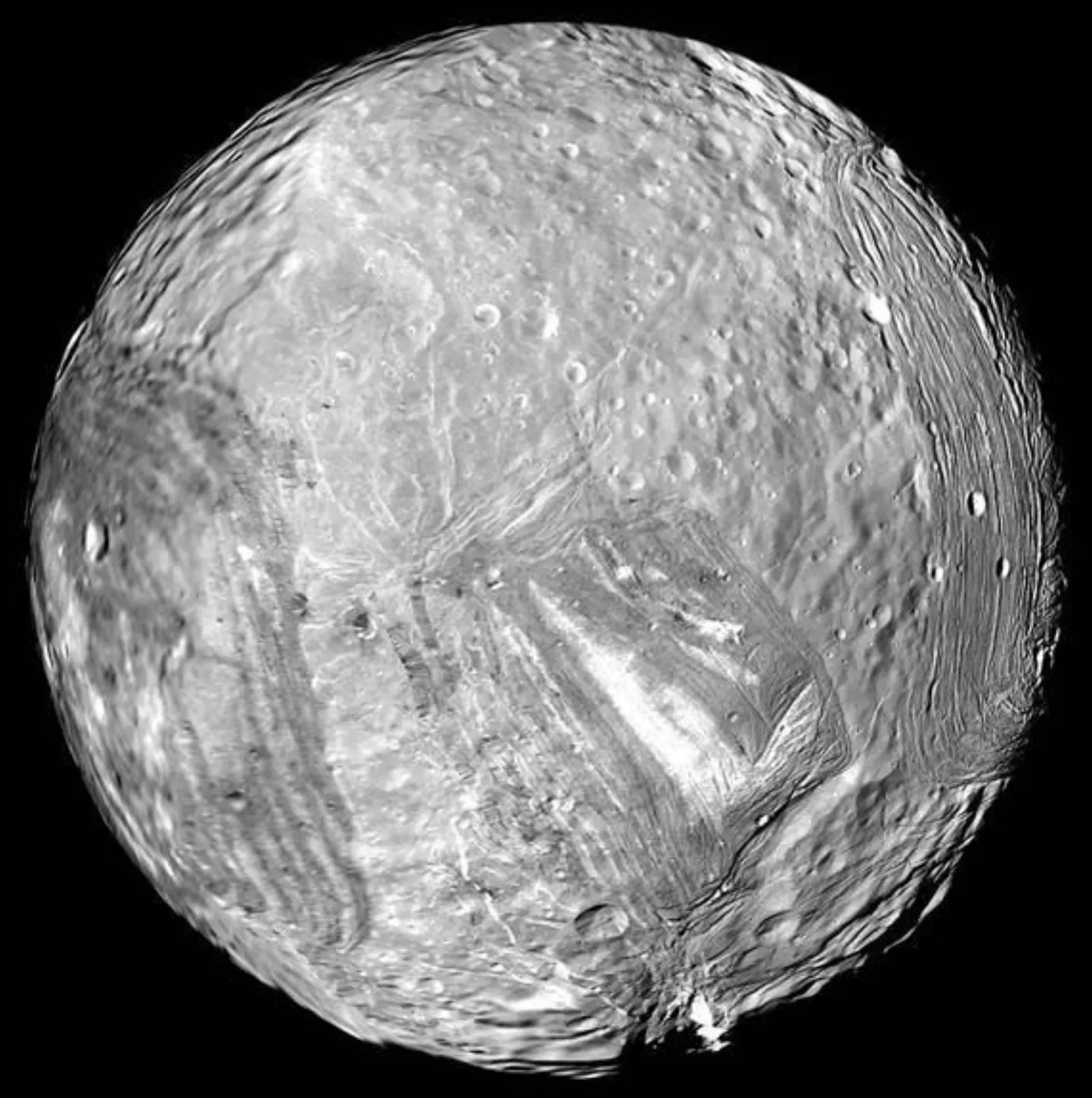
1 of 3 · swipe the photo aside, tap to look closer
A globe in your hands
Drag the globe to spin it. Tap a place and the globe turns to it.
For the curious
Miranda is the smallest of the five big moons of Uranus, about five hundred kilometres across. Scientists argue about where its patches come from: perhaps the moon was once smashed to pieces that stuck back together any old how, or perhaps ice inside rose and sank, breaking the surface. Everything we know comes from a few hours of Voyager 2's flyby in January nineteen eighty-six.
| Diameter | 471 km |
|---|---|
| Gravity | 0.1 m/s² |
| Day | 33.9 hours |
| Average temperature | -190 °C |
Astronaut exam
Find 5 more and we'll start the exam.
