 Growney Space
Triton
Triton is Neptune's largest moon. It circles the planet the wrong way round and was once a world of its own.
What's hidden on Triton?
Found 0 of 10
Drag sideways to walk all the way round. Tap the seeds

Look for the seeds — I'll tell you about every wonder!
Field journal · Triton
Nothing yet. The wonders you find will be written here.
Peek at all the wonders
- Triton flies round Neptune backwards: it is the only big moon that moves against its planet's spin.
- Triton was once an icy world of its own, like Pluto, until Neptune caught it with its gravity.
- Geysers erupt on Triton, not of water but of nitrogen with dark dust. The wind spreads the dust in long dark streaks.
- Triton is one of the coldest places in the solar system: two hundred and thirty-five degrees below zero. The nitrogen we breathe lies here as frost.
- Part of Triton is wrinkled like the skin of a melon. Scientists actually call it "cantaloupe terrain".
- From here Neptune is blue and a little smaller than a fist, fifteen times wider than our Moon.
- I walked all the way round Triton, and Neptune disappeared! Triton always keeps the same side towards Neptune, so from the far side you can't see it.
- Triton has air, but so little that sounds can't be heard. Shout, and only the radio answers.
- You would jump twelve times higher than on Earth, right up to the second floor.
- A day on Triton lasts almost six of our days: three days of light, three of night.
Experiments on Triton
Nitrogen geysers
Triton's geysers throw nitrogen and dark dust kilometres high. Steer the probe over the pink ice, dodge the jets and catch nitrogen ice crystals!
Find every wonder and the game opens! Seeds left: 10 of 10.
Expedition album
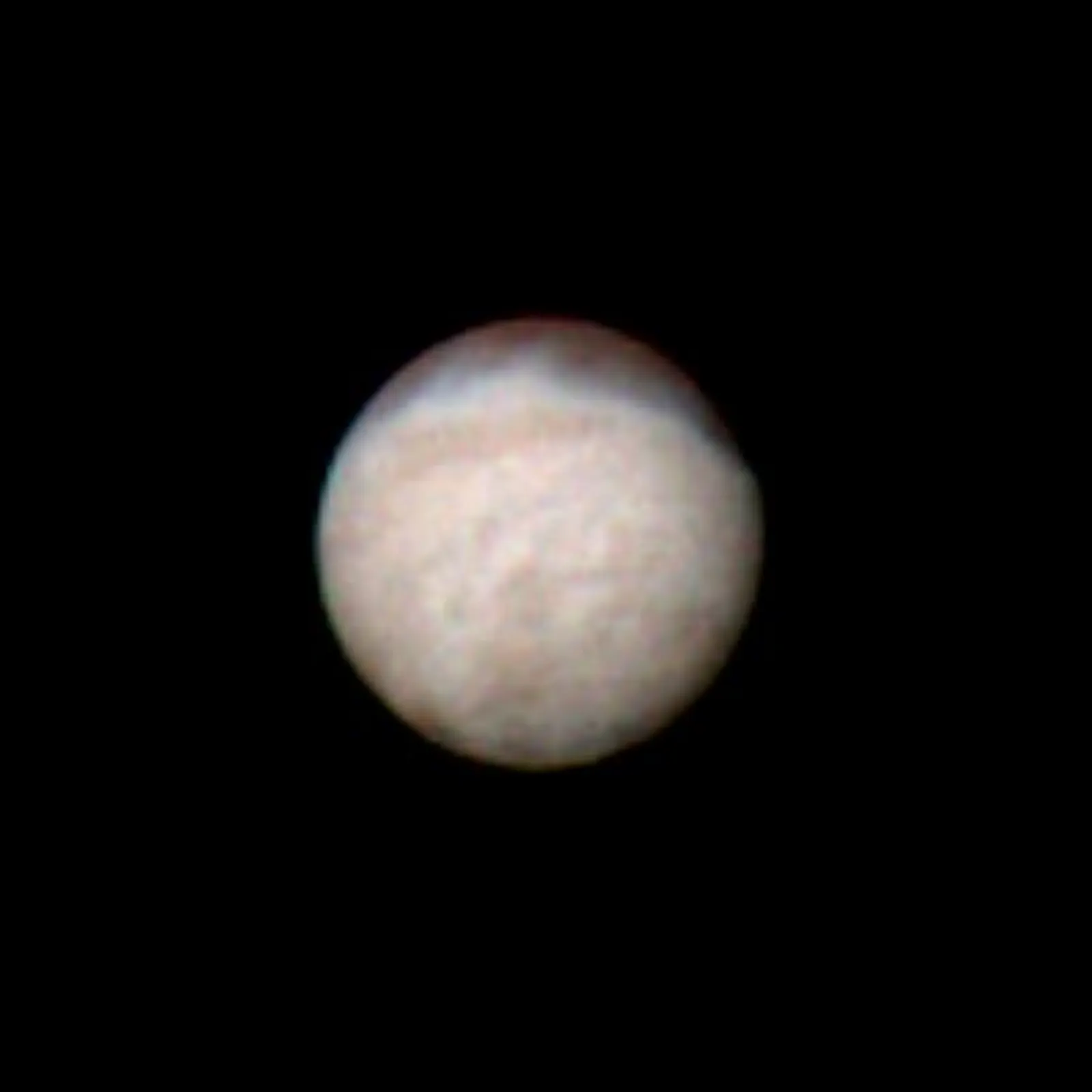
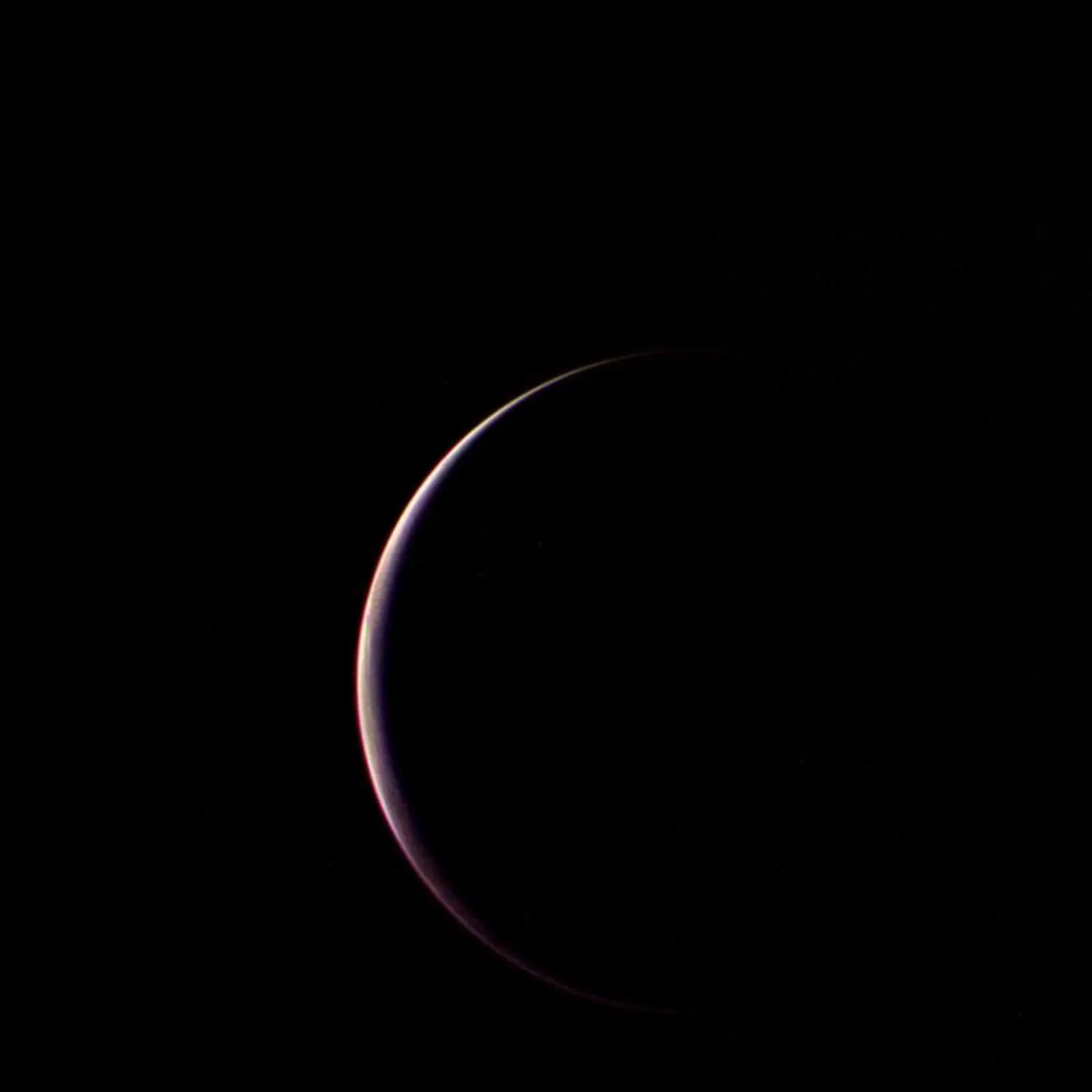
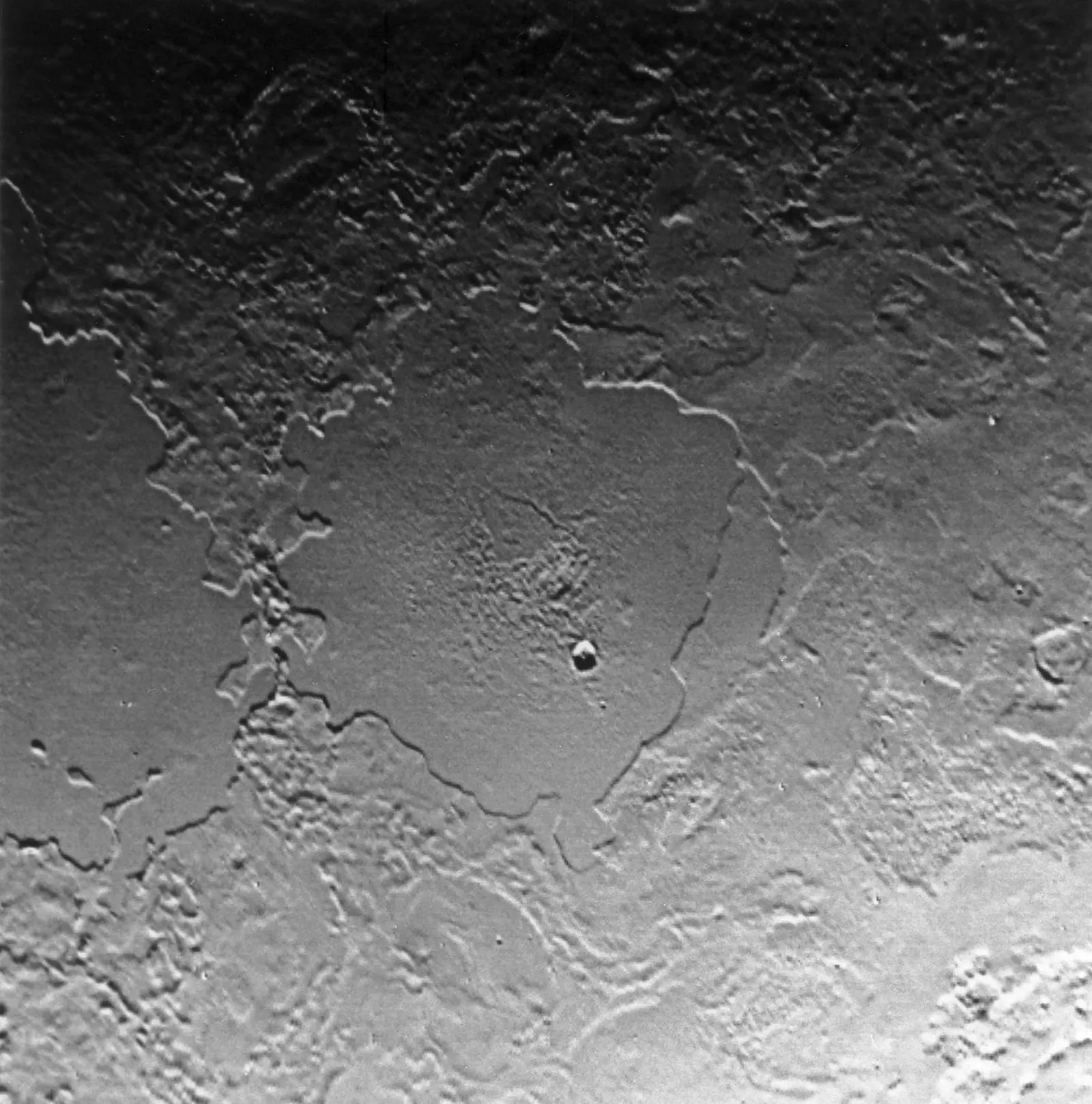
1 of 3 · swipe the photo aside, tap to look closer
A globe in your hands
Drag the globe to spin it. Tap a place and the globe turns to it.
For the curious
Triton is a little smaller than our Moon. It was discovered only seventeen days after Neptune itself. The only spacecraft to see Triton up close was Voyager 2 in nineteen eighty-nine: it spotted the geysers and smooth plains of frozen icy lava. Triton is slowly drifting closer to Neptune, and in billions of years the planet will tear it into rings.
| Diameter | 2,707 km |
|---|---|
| Gravity | 0.8 m/s² |
| Day | 141 hours |
| Average temperature | -235 °C |
Astronaut exam
Find 5 more and we'll start the exam.
